Finding Stillness in the Himalayas: Why Jibhi is the Perfect Workation Escape
25 Mar 2026•3 min read
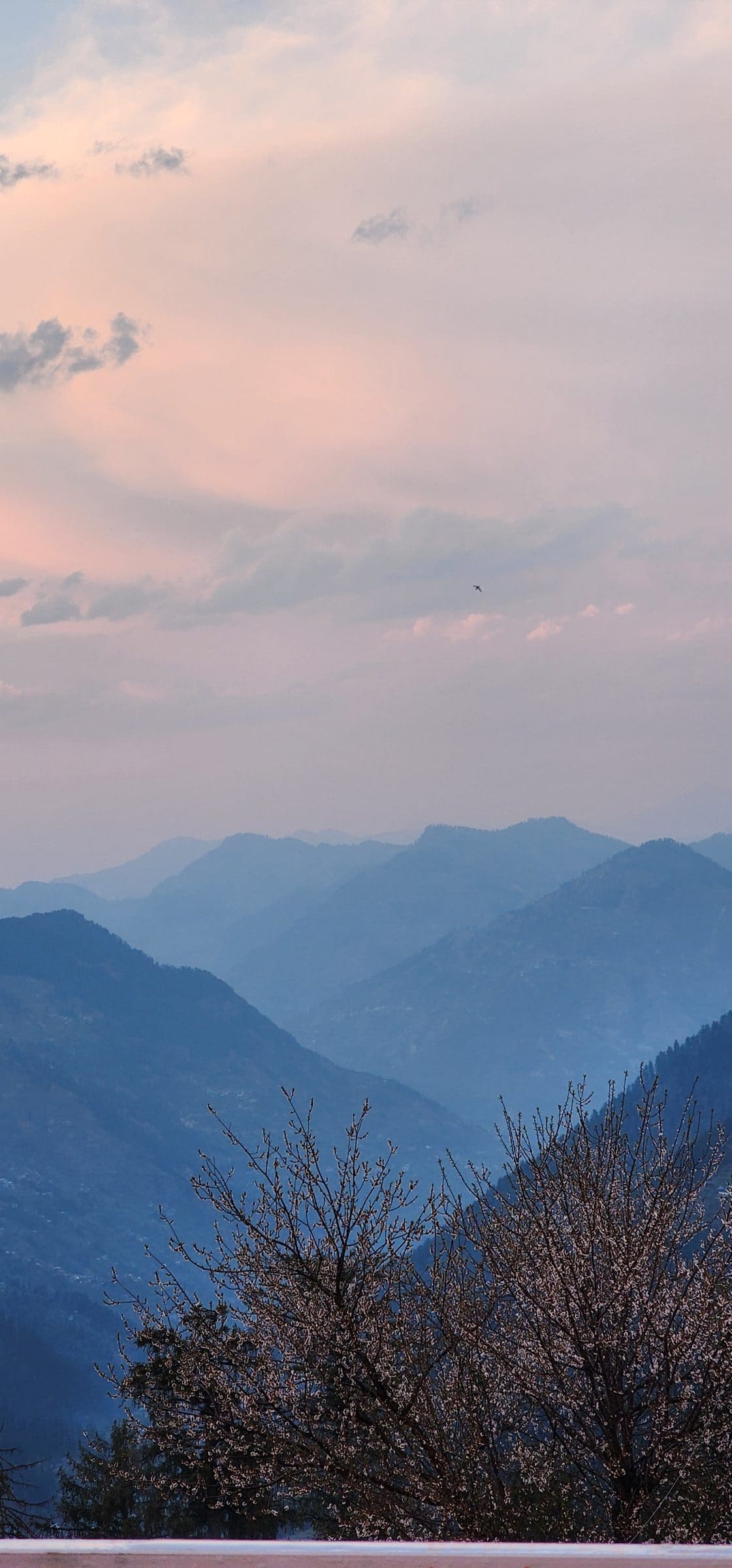
Remote work in Jibhi? Yes. Discover the best workation in Tirthan Valley—Wi-Fi, mountains, and soulful living. Plan your escape with Ailyak Stays & Experiences.
Share this guide
Workation in Jibhi: Where Nature Meets Focus
Jibhi isn’t just a place to visit—it’s a place to become still. Nestled in the quiet heart of Tirthan Valley at 2250m, this Himachal hidden gem is where the Himalayas slow time to a hush and the air itself seems to whisper. If you’re searching for a jibhi workation, you’re not just booking a trip—you’re unlocking a rare space where focus meets peace, and nature becomes your office backdrop.
A workation in Jibhi isn’t about squeezing productivity into a holiday. It’s about letting the valley’s slow rhythm—locally called “Ailyak”—reshape how you work. Here, the only interruptions are the sounds of the Tirthan River and the distant call of Himalayan birds. The wooden balconies of family-run homestays become your desk, and the scent of pine needles in the air sharpens your clarity. Whether you’re a digital nomad testing the waters or a remote worker craving depth, Jibhi offers a Himalayan paradise where unleashing productivity isn’t just possible—it’s inevitable.
Why Jibhi Is the Ultimate Himalayan Paradise for a Workation
Jibhi sits at the edge of the Great Himalayan National Park buffer zone, far from the crowds of Manali or Kasol. This is a valley where apple orchards line the riverbanks and wooden kothis stand like silent sentinels. The altitude—2250m—keeps the air crisp year-round, ideal for long hours of focus without the drowsiness of lower altitudes. And unlike busier hill stations, Jibhi has no ATMs, no traffic, and minimal mobile networks—just pure, uninterrupted stillness.
Here, productivity in the Himalayas isn’t a buzzword. It’s a lived experience. Mornings begin with the golden light filtering through deodar trees. Your internet? Patchy but workable with a local SIM. Your office? A wooden chair on a homestay balcony overlooking the valley. There’s no better place to unleash productivity than where the mountains themselves seem to pause.
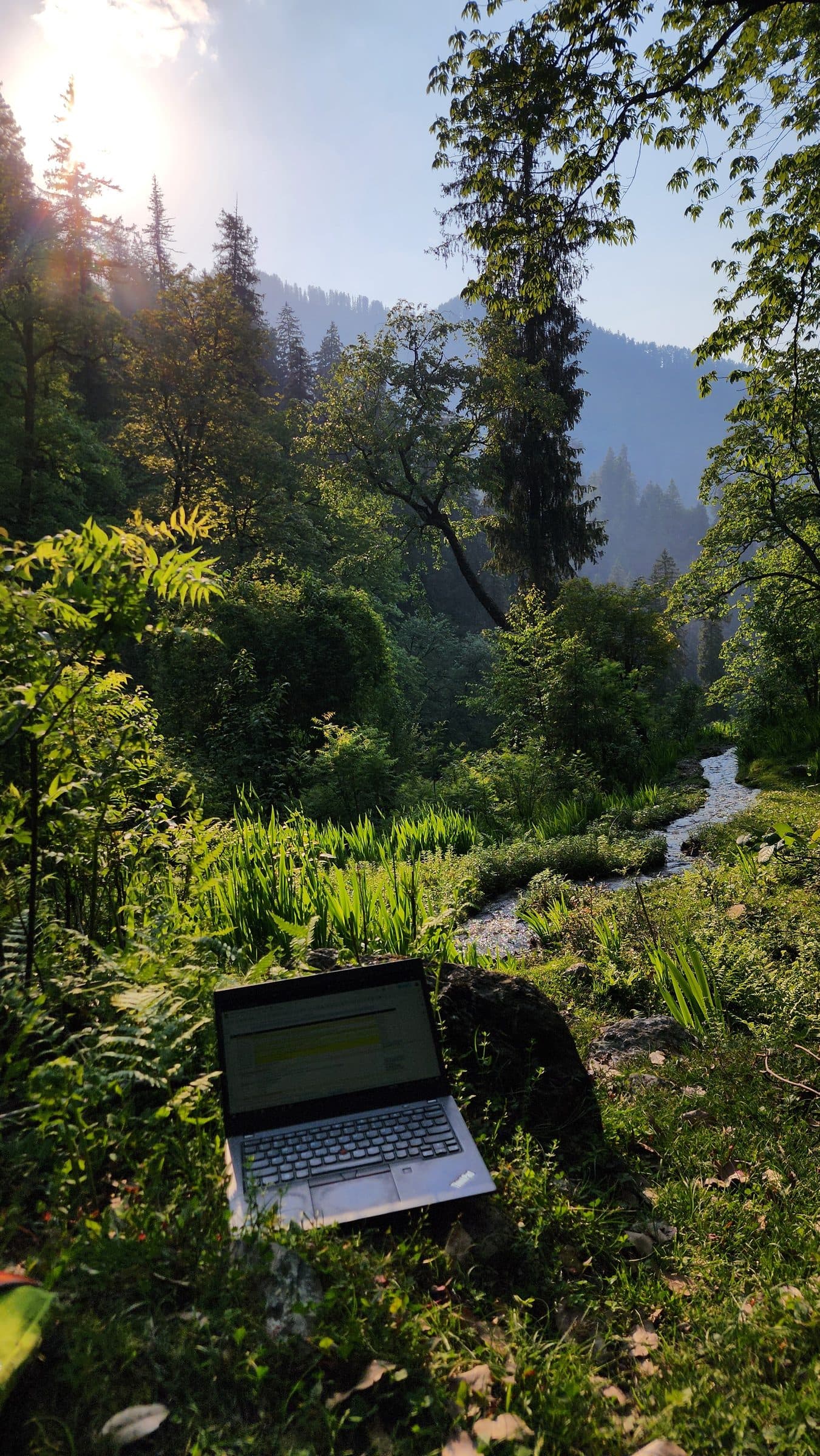
Sunlit view of dense green forest, a stream, and lush vegetation in the valley
How to Plan Your Jibhi Workation: Logistics, Stays, and Local Tips
A seamless workation in Jibhi starts with getting here.
From Delhi: 535 km via NH44 and NH305 (~12–13 hours).
You can also take an overnight bus to Bhuntar or Aut, then hire a cab to Jibhi.
From Manali: 145 km, 4–5 hours via Kullu and Aut Tunnel.
Nearest Airport: Bhuntar (Kullu-Manali Airport), 65 km away (~2 hours by road).
Nearest Railhead: Jogindernagar, 95 km (~3 hours).
The final leg from Aut Tunnel to Jibhi (56 km) winds through lush forests and river gorges—part of the journey that helps you unplug before you even arrive.
Once in Jibhi, stay in a family-run wooden homestay. Most offer private balconies, stable power (with inverters for monsoon cuts), and meals made from local produce. Many also provide dedicated workspaces with decent Wi-Fi—though don’t expect fiber speeds. Bring cash; Jibhi has no ATM. Get it in Banjar (10 km) or Aut (56 km).
Mobile signal is spotty—BSNL works best, Airtel in most spots, and Jio is patchy. Use offline maps and download work files ahead. Electricity cuts are common in monsoon months, so expect to rely on inverters.
What to Do Between Work Sessions: Slow Adventures in Jibhi Valley
A jibhi workation isn’t all work. Between focused sessions, step into the rhythm of the valley.
Walk to Jibhi Waterfall (1 km, 20 minutes)—a refreshing midday break. Visit Shringa Rishi Temple (2 km) for a quiet moment among wood-and-stone pagodas. Or take a short drive to Chehni Kothi (7 km drive + 45-minute trek), one of the tallest traditional towers in Himachal Pradesh, standing as a testament to Kullu-Kinnauri heritage.
For a bigger adventure, head to Jalori Pass (14 km, 45 minutes)—the highest motorable pass in Kullu at 3120m. Open May–October, it offers alpine meadows, panoramic views, and treks to Serolsar Lake (sacred high-altitude lake at 3100m) or Raghupur Fort ruins (3300m, 360° views). These aren’t just hikes—they’re soul-nourishing respites from your screen.
And don’t miss the chance to try local Himachali cuisine. From rich siddu to tangy chha gosht, the flavors here are slow-cooked, just like your work should be.
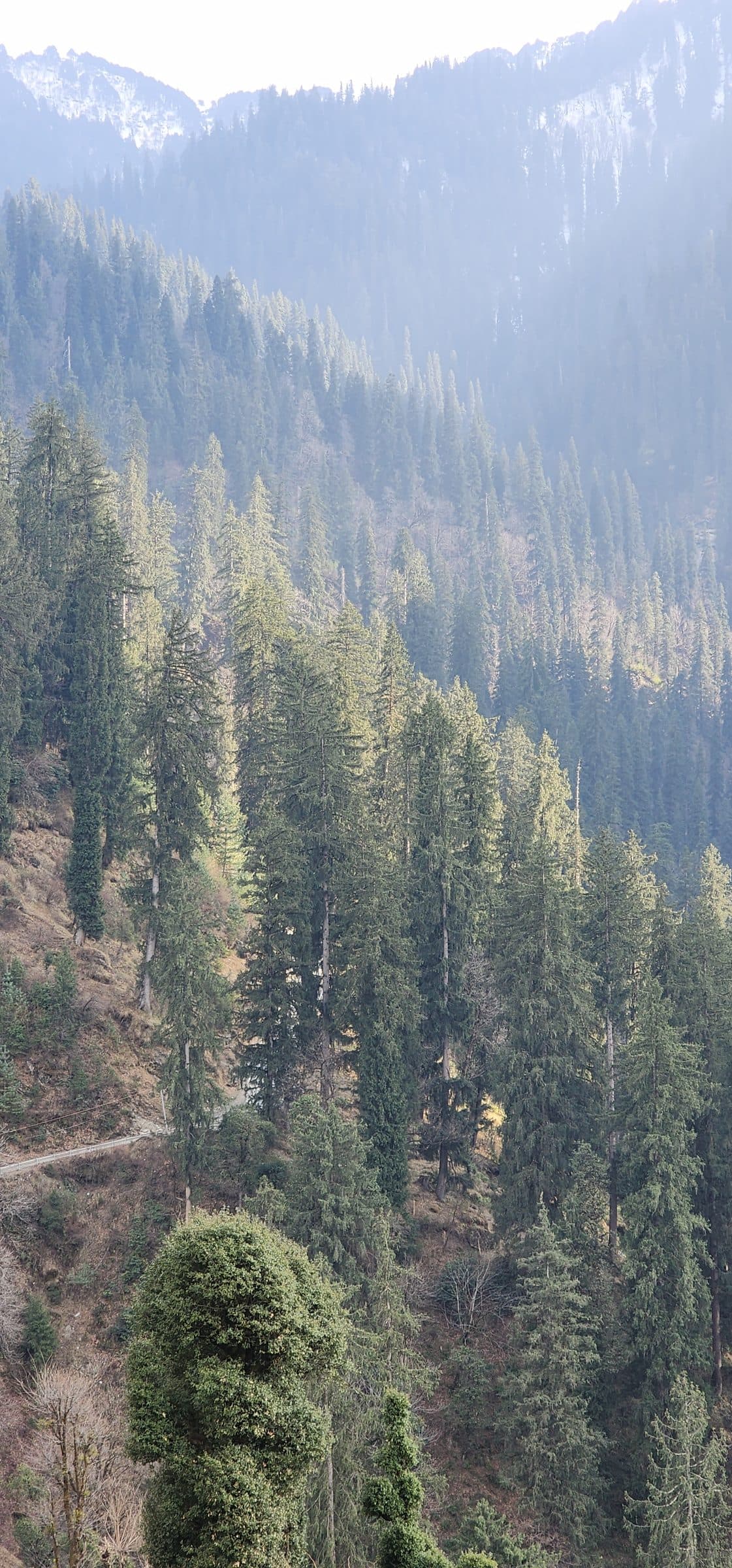
Dense pine trees covering a sloping hillside in the Jibhi Valley
When to Go: Timing Your Jibhi Workation for Best Results
Timing matters. October–November is peak season: crisp air, clear skies, and golden foliage after the monsoon. March–April brings apple blossoms and mild warmth—perfect for gentle walks and relaxed work sessions. July–August is lush and green, but landslides can block NH305, and heavy rains make travel tricky. December–February brings snow, closing Jalori Pass but turning Jibhi into a quiet snow-dusted retreat ideal for deep focus.
For most workation in Jibhi, aim for October–November or March–April. You’ll avoid crowds, enjoy stable weather, and experience the valley at its most beautiful.
Explore more hidden Himalayan gems like Shoja to pair with your Jibhi escape, or discover offbeat trekking trails in Tirthan Valley for weekend adventures. If you're planning a longer stay, learn how to reach Jibhi by train or road for the smoothest journey.
Jibhi Trip Essentials
For planning routes, timing, and live conditions, use the core Jibhi guides:
How to Plan a Successful Jibhi Workation
Discover how to set up a productive and peaceful workation in Jibhi's serene Himalayan environment.
Total Time: 1 hour
1
Choose a Family-Run Homestay
Select a locally-owned homestay with wooden balconies and mountain views to immerse yourself in the natural setting while ensuring basic amenities for remote work.
2
Prepare for Minimal Connectivity
Bring a local SIM card for patchy but usable internet and download essential work materials offline to stay productive despite limited mobile networks.
3
Embrace the Local Rhythm
Align your work schedule with Jibhi’s slow pace—'Ailyak'—starting early in the morning when the air is crisp and distractions are minimal.
4
Set Up Your Nature-Backed Workspace
Use outdoor wooden balconies or quiet indoor nooks as your office, surrounded by pine-scented air and the sound of the Tirthan River to enhance focus and clarity.
Frequently Asked Questions
Yes, Jibhi is ideal for a workation as it offers reliable Wi-Fi, quiet workspaces, and a calm, distraction-free environment in family-run homestays like those by Ailyak Stays & Experiences.
April is an ideal time for a workation in Jibhi, with blooming apple blossoms, pleasant temperatures between 12–20°C, and clear skies before the summer rush.
Most homestays in Jibhi offer reliable Wi-Fi, and BSNL provides the most consistent mobile network; Airtel works in most areas, while Jio can be patchy.
Electricity cuts can occur, especially during the monsoon, but most homestays, including Ailyak properties, have backup inverters to keep devices charged.
Jibhi remains offbeat and peaceful, with no honking, crowds, or distractions, offering a mindful workation experience aligned with nature’s rhythm and the local concept of 'ailyak'—doing things calmly and without rush.
When not working, you can visit Ailyak Café for slow-brew coffee, explore pine forests, enjoy the Tirthan River, and immerse in the serene Himalayan landscape.
Related reads
- Where the Mountains Whisper: Discovering Jibhi Tirthan Valley’s Quiet Magic
Jibhi Tirthan Valley guide: best places to visit, weather, safety, and how to reach. Discover serene treks, homestays, and the true spirit of ailyak in Himachal Pradesh.
- Ailyak Stays Jibhi: Where Time Slows and Mountains Speak
Ailyak Stays Jibhi: Experience slow mountain living in Tirthan Valley. Wooded homestays, river walks, and mindful retreats in Himachal Pradesh.
- Where the Mountains Whisper: Finding Stillness in Jibhi Valley This April
Best cafe in Jibhi? Discover Ailyak Café — a soulful space in Jibhi Valley. Explore places to visit, weather, and safe travel tips for April 2026.
- Where the Mountains Whisper: A True Escape to Jibhi Tirthan Valley
Nestled in Himachal Pradesh, Jibhi Tirthan Valley is a serene mountain sanctuary where time stands still. Discover untouched beauty, whispering deodars, and soul-soothing escapes in this hidden Himalayan gem.
- Jibhi Reimagined: A Slow Journey Through the Heart of Tirthan Valley
Jibhi Tirthan Valley tour package guide: best time, places to visit, safety, and how to plan your trip. Discover Jibhi Himachal Pradesh with verified local insights.
- The Slow Road from Manali to Jibhi: A Journey Through the Heart of Tirthan Valley
Manali to Jibhi distance is 145 km (4–5 hrs). Get route tips, weather advice, and discover slow stays in Tirthan Valley. Plan your 2026 trip.
Stay Updated
Subscribe to our newsletter for travel tips and updates about Jibhi.