Where the Mountains Whisper: A True Escape to Jibhi Tirthan Valley
28 Dec 2025•4 min read
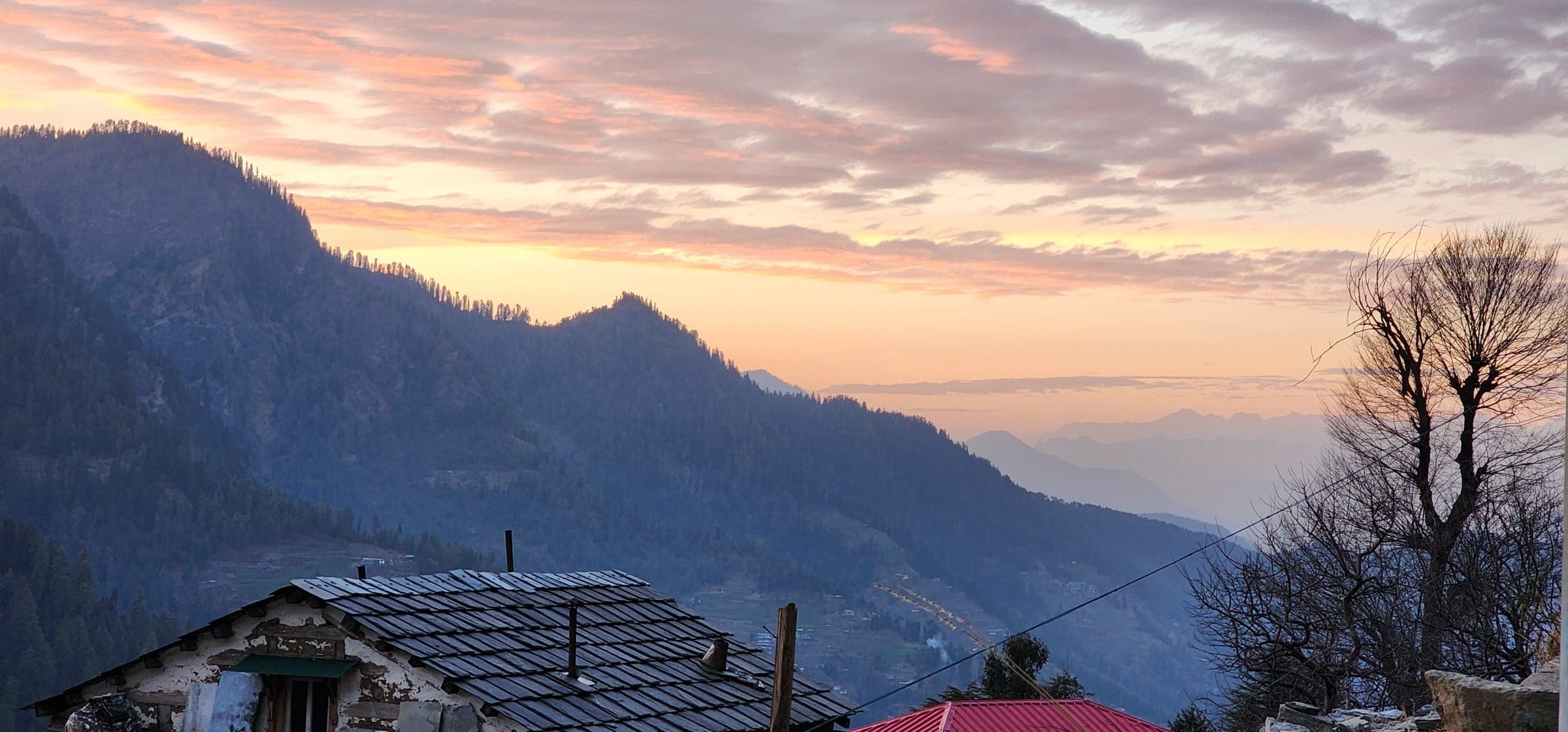
Nestled in Himachal Pradesh, Jibhi Tirthan Valley is a serene mountain sanctuary where time stands still. Discover untouched beauty, whispering deodars, and soul-soothing escapes in this hidden Himalayan gem.
Share this guide
Jibhi Tirthan Valley – A Slow Mountain Sanctuary
Tucked in the quiet folds of Himachal Pradesh’s Kullu District, Jibhi Tirthan Valley is not just a destination—it’s a state of mind. At 2250 meters, where the Tirthan River hums through ancient deodar forests and wooden homestays cling to forested slopes, time slows into what locals call “ailyak”—a way of being calm, unhurried, and deeply present.
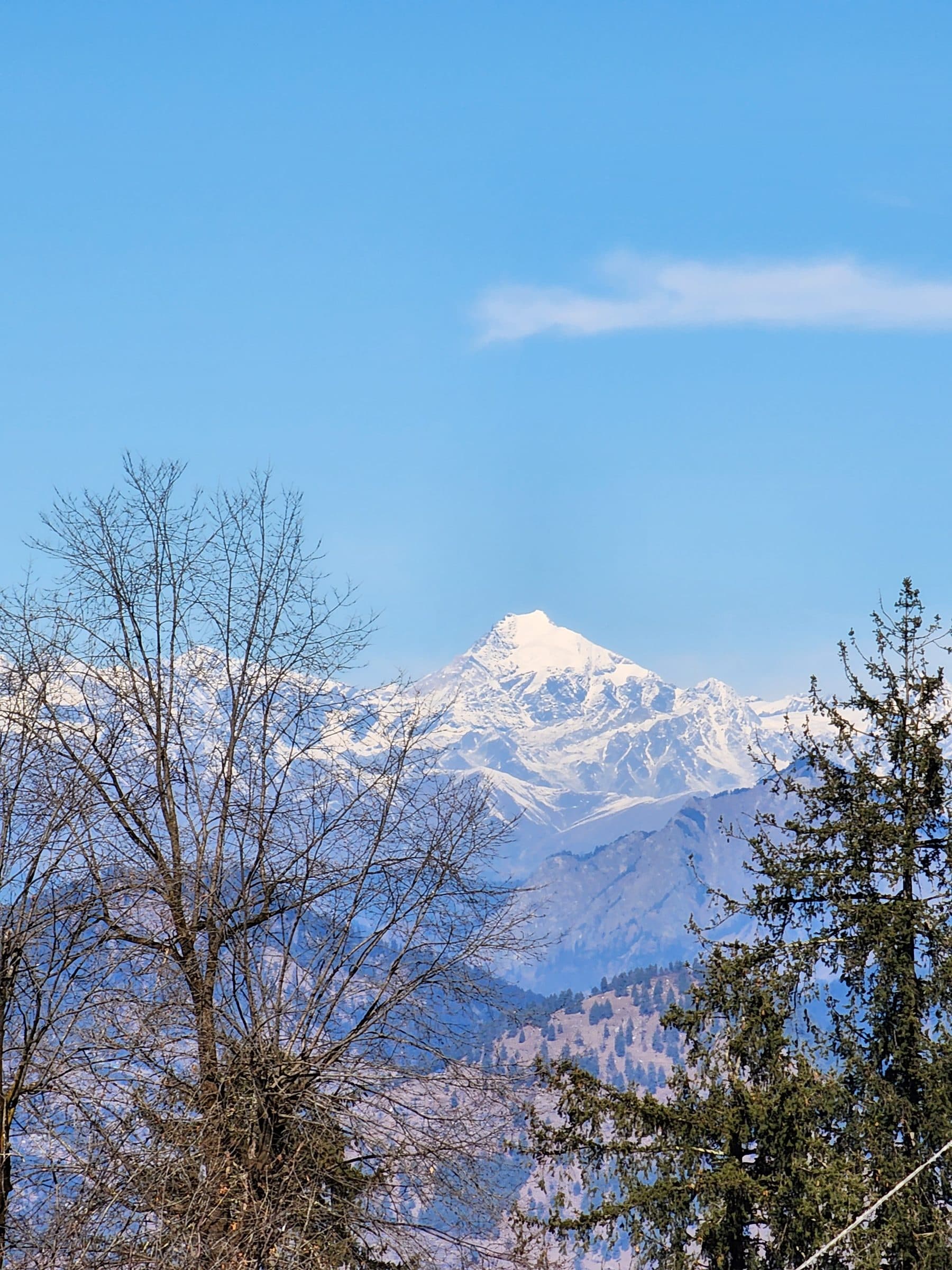
Bare tree branches in the foreground against a snow-covered mountain
If you're searching for places to visit in Jibhi, the answer isn’t just a checklist. It’s in the morning mist rising off apple orchards, the crunch of pine needles underfoot on a forest trek, or the first sip of chai while watching snow settle on distant peaks.
Where is Jibhi in Himachal Pradesh?
Jibhi, Himachal Pradesh, lies in the unspoiled Tirthan Valley, 10 km from Banjar along NH305. It’s part of a remote stretch of the Kullu Valley that few tourists rush to—by design. This is the buffer zone of the UNESCO-listed Great Himalayan National Park, where brown trout thrive in crystal streams and heritage wooden kothis stand as echoes of a resilient past.
What to Do in Jibhi – Beyond the Usual
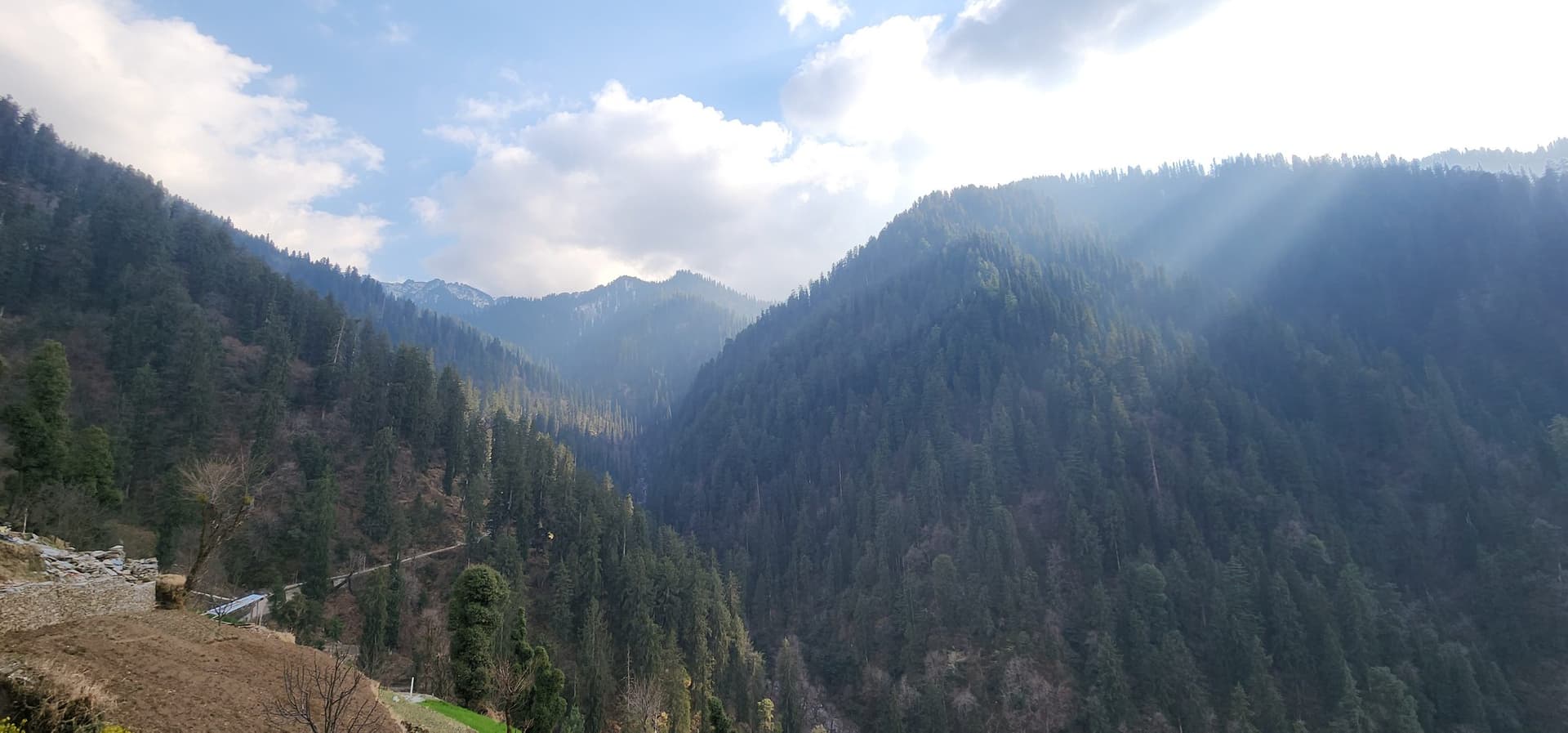
Layered forested mountains and valleys under bright, misty sunlight
Looking for what to do in Jibhi Himachal Pradesh? Start with stillness. Then, explore:
- Trek to Chehni Kothi – A 7-km drive and 45-minute uphill trek lead to a 9-storey medieval tower, one of the tallest traditional structures in the Himalayas. Built with interlocking wood and stone, it’s a marvel of earthquake-resistant design.
- Drive to Jalori Pass – Just 14 km from Jibhi, this 3120m pass opens from May to October, offering access to alpine meadows and the sacred Serolsar Lake, a 5-km forest trek through oak and deodar, rich with birdlife like the Himalayan Monal.
- Trout fishing in the Tirthan River – With a permit from Banjar or Larji, cast a line in one of India’s best-preserved trout habitats.
- Homestay life – Stay in family-run wooden cottages, where days unfold with slow meals, crackling fires, and starlit skies unobscured by light pollution.
Jibhi in March, February, January – Can You Visit?
Jibhi in February and January brings deep snow and solitude. While Jalori Pass closes, Jibhi village remains accessible from Kullu and is a rare Himalayan spot for snow tourism without road blockages. Expect power cuts—most homestays run on inverters—and temperatures dipping below freezing. It’s magical, but pack warm.
Jibhi in March marks transformation. Apple blossoms begin to bloom, days lengthen, and the valley wakes gently. With mild weather and fewer crowds, it’s one of the best times to experience ailyak in full flow.
Is Jibhi Safe to Visit Now?
Yes. As of April 2026, Jibhi is open and safe to travel. The roads from Aut Tunnel and Bhuntar are clear. While NH305 can be prone to landslides in monsoon (July–August), current conditions are stable. Mobile networks are limited—BSNL and Airtel work best—but connectivity isn’t the point here. This is where you unplug to reconnect.
Jibhi vs Kasol – Which is Better?
Many ask: which is better, Jibhi or Kasol?
Kasol buzzes with backpackers, cafes, and a digital-nomad pulse. Jibhi offers the opposite: silence, forest immersion, and cultural authenticity. No ATMs, no crowds, no noise. If you seek soulful solitude over social scenes, Jibhi tourist places—from Chehni Kothi to Serolsar Lake—deliver a deeper Himalayan experience.
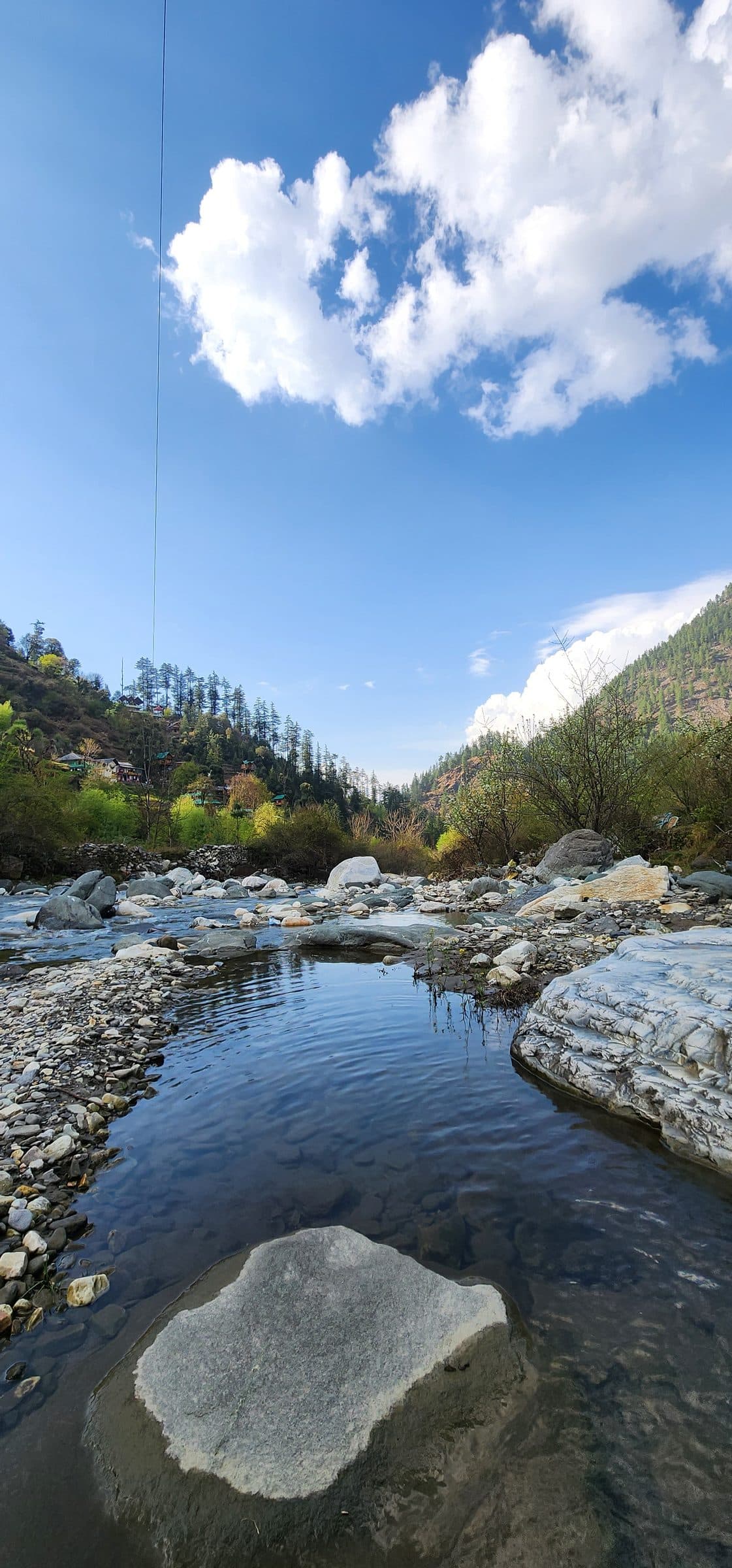
Clear water reflecting bright blue sky with white clouds over rocks
How to Reach Jibhi Tirthan Valley – From Delhi, Manali, Shimla
- Jibhi from Delhi: 535 km, 12–13 hours via NH44, Chandigarh, NH21, Aut Tunnel, and NH305. Overnight bus to Bhuntar or Aut, then cab to Jibhi.
- Manali to Jibhi: 145 km, 4–5 hours via Kullu and Aut Tunnel.
- Shimla to Jibhi: 218 km, 5–6 hours via Narkanda–Rampur or Mandi.
- Nearest airport: Bhuntar (65 km, 2 hours)
- Nearest railhead: Jogindernagar (95 km, 3 hours)
What Is Your Source of This Information?
This guide is based on verified ground facts: official road distances, altitude data, seasonal access patterns, and local regulations (e.g., trout fishing permits, Jalori Pass closure dates). Travel logistics align with NH305 conditions and Himachal Pradesh tourism advisories as of April 2026.
For those ready to live ailyak, Ailyak Stays & Experiences offers soulful homestays in Jibhi, Shoja, and Seri—where forest bathing, riverside picnics, and bonfire stories are woven into every stay.
Explore mindful escapes: jibhi.in/partners
---META
Jibhi Tirthan Valley guide: best time to visit, treks, weather, and how to reach. Discover hidden Himalayan beauty, safety tips, and serene stays in April 2026.
Jibhi Trip Essentials
For planning routes, timing, and live conditions, use the core Jibhi guides:
How to Experience Jibhi Tirthan Valley
Discover the serene beauty and slow living of Jibhi Tirthan Valley through mindful travel.
Total Time: 1 hour
1
Reach Jibhi
Travel to Jibhi in Himachal Pradesh’s Kullu District, located 10 km from Banjar along NH305, within the buffer zone of the Great Himalayan National Park.
2
Immerse in Nature
Spend time in the deodar forests, listen to the Tirthan River, and enjoy views of snow-clad peaks and apple orchards to embrace the local concept of 'ailyak'—calm and presence.
3
Explore Local Sights
Visit nearby attractions like Chehni Kothi and take forest treks to absorb the region's heritage and natural beauty.
4
Stay in Homestays
Book a stay in traditional wooden homestays that reflect mountain architecture and offer an authentic highland experience.
5
Unplug and Relax
Disconnect from daily routines by enjoying quiet mornings with chai, walking through pine trails, and watching sunsets over the misty mountains.
Frequently Asked Questions
Jibhi Tirthan Valley is located in the Kullu District of Himachal Pradesh, 10 km from Banjar along NH305, within the buffer zone of the Great Himalayan National Park.
The best things to do in Jibhi include trekking to Chehni Kothi, driving to Jalori Pass, trout fishing in the Tirthan River with a permit, and experiencing homestay life in traditional wooden cottages.
Jibhi lies in the buffer zone of the UNESCO-listed Great Himalayan National Park, offering access to pristine forests, rivers, and diverse wildlife.
Serolsar Lake is a 5-km forest trek from Jalori Pass, which is 14 km from Jibhi and accessible by road from May to October.
Yes, trout fishing is permitted in the Tirthan River with a license obtainable from Banjar or Larji, known for being one of India’s best-preserved trout habitats.
Jibhi offers a slow, immersive mountain experience with ancient deodar forests, traditional wooden homestays, and a culture of calm called 'ailyak,' away from tourist crowds.
Related reads
- Jibhi Reimagined: A Slow Journey Through the Heart of Tirthan Valley
Jibhi Tirthan Valley tour package guide: best time, places to visit, safety, and how to plan your trip. Discover Jibhi Himachal Pradesh with verified local insights.
- Where the Mountains Whisper: Discovering Jibhi Tirthan Valley’s Quiet Magic
Jibhi Tirthan Valley guide: best places to visit, weather, safety, and how to reach. Discover serene treks, homestays, and the true spirit of ailyak in Himachal Pradesh.
- Jibhi, Himachal Pradesh: Where Time Slows Down in the Himalayas
Jibhi Himachal Pradesh travel guide: best time to visit, how to reach, things to do, and stays. Plan your 2026 trip with local insights.
- Where the Mountains Whisper: Your Guide to Jibhi Valley in April 2026
Best places to visit in Jibhi, Himachal Pradesh — from Jalori Pass to Chehni Kothi. Complete guide for 2026 with weather, safety, travel tips, and where to stay.
- The Quiet Magic of Jibhi: Why This Himalayan Valley Is Calling You Now
Delhi to Jibhi train not available. Nearest railhead Jogindernagar. Best routes, weather, and places to visit in Jibhi Himachal Pradesh. Safe to visit now?
- Where Stillness Lives: Your Guide to Jibhi Valley in April 2026
Book hotels in Jibhi with confidence. Discover what to do, best time to visit, and why Jibhi Valley is the soul of Himachal Pradesh.
Stay Updated
Subscribe to our newsletter for travel tips and updates about Jibhi.