Ghiyagi: What It Means & Why Jibhi Is Calling You Now | Jibhi Valley Guide
Ghiyagi: The Hidden Heartbeat of Jibhi Valley – Your Guide to the Real Himalayas
Discover ghiyagi — the soul of Jibhi Valley. Your guide to Jibhi in April 2026: weather, safety, places to visit, and how to experience ailyak.
Ghiyagi
Jibhi Valley and the serene hamlet of Ghiyagi are tucked away in the Tirthan Valley of Kullu District, Himachal Pradesh. At 2250 meters, this quiet mountain retreat sits beside the Tirthan River and acts as the gateway to Jalori Pass and the buffer zone of the Great Himalayan National Park. Known for its wooden heritage homes, crystal-clear trout streams, apple orchards, and the local concept of “Ailyak”—a rhythm of life that refuses to hurry—Jibhi and Ghiyagi are where the Himalayas whisper and time moves slowly.
Where Is Ghiyagi & Jibhi Valley Located in Himachal Pradesh?
Ghiyagi and Jibhi are located in the Tirthan Valley, Kullu District, Himachal Pradesh. The village sits at an altitude of 2250 meters along the Tirthan River and is the gateway to Jalori Pass and the buffer zone of the Great Himalayan National Park (a UNESCO World Heritage Site). From Delhi, it’s a 535-kilometer drive via NH44 to Chandigarh, then NH21 via Bilaspur, Sundernagar, and Mandi, followed by the Aut Tunnel and NH305 to Banjar, and finally a 10-kilometer drive to Jibhi. From Manali, it’s about 145 kilometers via NH3, the Aut Tunnel, and NH305.
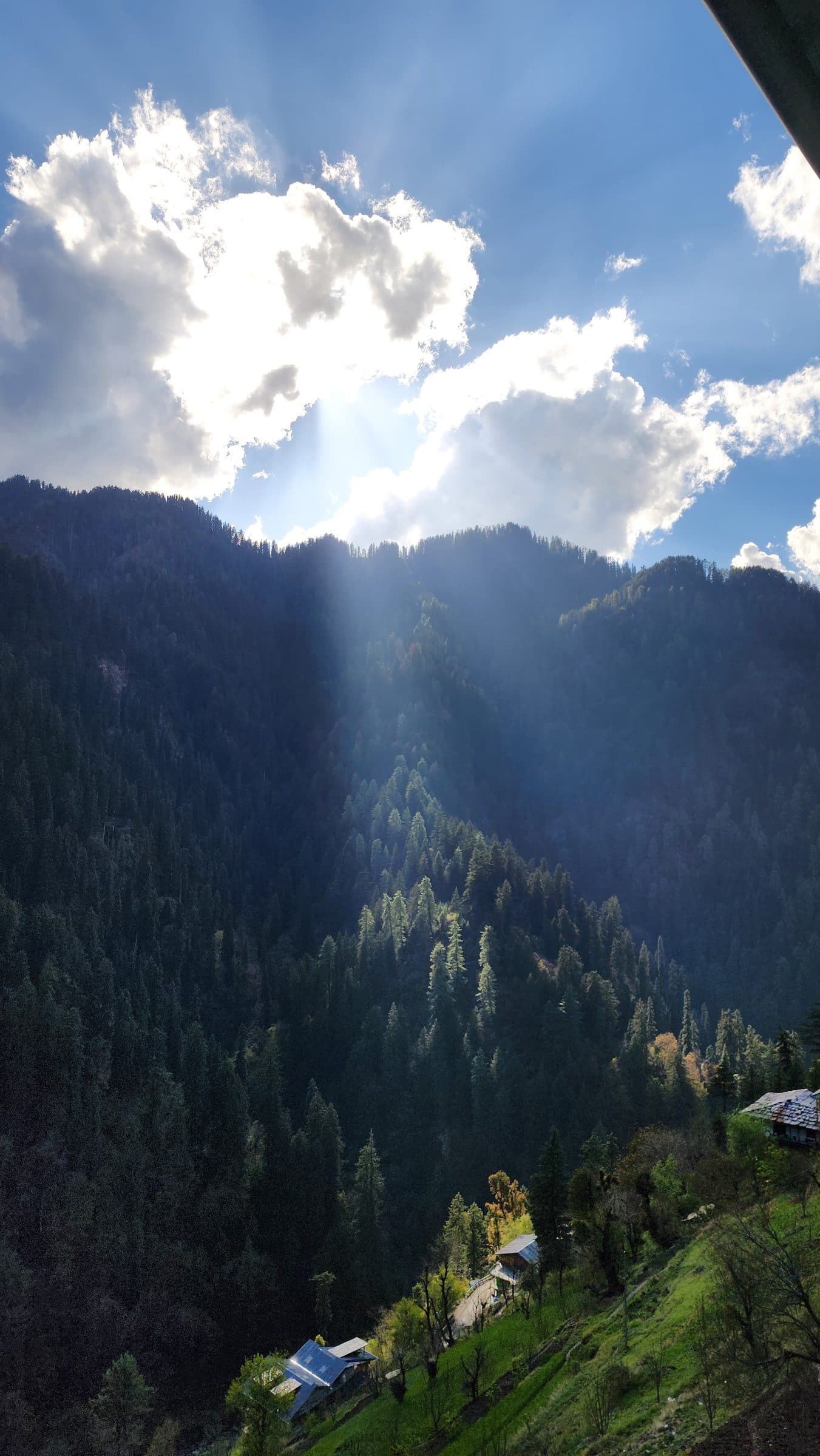
Green forested hillside with a small building under bright, cloudy sky
Is Ghiyagi & Jibhi Safe to Visit Right Now?
Yes. As of Saturday, 25 April 2026, Jibhi and Ghiyagi are safe for visitors. The roads are open, the village has no reported security concerns, and the local community warmly welcomes travelers. Mobile connectivity is limited—BSNL has the most reliable signal, while Airtel works in most spots and Jio is patchy. Carry cash from Banjar, as Jibhi has no ATM. Electricity cuts can occur during monsoon months; most stays have backup inverters.
What to Do in Ghiyagi & Jibhi Valley
With fewer crowds than Manali or Kasol, Jibhi and Ghiyagi offer a peaceful escape rich in nature, heritage, and slow living.
: Drive 14 kilometers from Jibhi to reach the highest motorable pass in the Kullu region. Open May–October, it connects to Shimla district and offers sweeping views, small tea stalls, and access to Serolsar Lake and Raghupur Fort.
How to Plan a Visit to Ghiyagi in Jibhi Valley
A step-by-step guide to visiting the serene Himalayan village of Ghiyagi in Jibhi Valley, Himachal Pradesh.
Total Time: 1 hour
1
Determine the Best Time to Visit
Plan your trip outside the monsoon season if possible, as electricity cuts are common during those months. The region is currently safe to visit with open roads and welcoming locals.
2
Travel to Ghiyagi via Major Route
From Delhi, drive 535 kilometers via NH44 to Chandigarh, then take NH21 through Bilaspur, Sundernagar, and Mandi, followed by the Aut Tunnel and NH305 to Banjar, and finally a 10-kilometer drive to Jibhi and Ghiyagi.
3
Prepare for Limited Connectivity
Carry sufficient cash from Banjar as there are no ATMs in Jibhi. Mobile networks are limited—BSNL offers the most reliable signal, Airtel works in most areas, and Jio connectivity is patchy.
4
Choose Accommodation with Essentials
Book a stay that has a backup inverter for power during outages, especially if visiting in the monsoon. Opt for heritage wooden homes for an authentic local experience.
Frequently Asked Questions
Jibhi Valley is located in the Tirthan Valley of Kullu District, Himachal Pradesh, 145 km from Manali and 535 km from Delhi. It lies at an elevation of 2,250 meters and is part of the buffer zone of the Great Himalayan National Park.
April 2026 is an ideal time to visit Jibhi, as the weather is mild (15–22°C), apple blossoms are in full bloom, and trekking trails are accessible. The valley is especially scenic with full streams, waterfalls, and golden evening light.
Ghiyagi is an untranslatable term that represents the deep, quiet essence of Jibhi Valley — a rhythm that slows time and reconnects you to what matters. It’s not a place but a state of being, felt in moments like sipping tea on a sunlit porch or hearing wooden shutters creak at dawn.
In April, Jibhi experiences spring weather with mild days (15–22°C) and cool nights (5–10°C). The valley is lush and photogenic, with apple blossoms, flowing streams, and thundering waterfalls.
Visitors can walk to Jibhi Waterfall via a 15-minute forest trail and enjoy a refreshing dip in the pool. The valley encourages slow travel, like sipping adrak chai on a porch or embracing the local rhythm of ailyak — doing things calmly and without rush.
Yes, April marks the beginning of the trekking season in Jibhi. Trails to Chehni Kothi and Jibhi Waterfall are clear and lush, and the road to Jalori Pass is expected to open by late April.
Explore Jalori Pass (3120m)
Visit Serolsar Lake: A sacred 3100-meter alpine lake 5 kilometers from Jalori Pass, accessible by a 2–2.5 hour trek through dense deodar and oak forest. Spot Himalayan Monal and Koklass Pheasant along the way.
See Chehni Kothi: A 9-storey medieval stone-and-wood tower, one of the tallest traditional structures in Himachal Pradesh. Located 7 kilometers from Jibhi, it’s a 45-minute uphill trek from the road-head at Chainsi Marg.
Walk to Jibhi Waterfall: Just 1 kilometer from the village center, this year-round waterfall is a 15–20 minute stroll and a perfect picnic spot.
Visit Shringa Rishi Temple: A 2-kilometer walk from Jibhi, this ancient temple in Kullu wood-and-stone style is central to local festivals like Dussehra.
Trout fishing in the Tirthan River: Requires a permit from the Fisheries Department at Larji or Banjar. The river is famous for brown and rainbow trout.
Slow down with Ailyak: Embrace the local rhythm of life—unhurried mornings, leisurely walks, and long conversations under apple trees.
Grilled fish, rice, and vegetables served on a mat and in a bowl
Which Is Better: Ghiyagi & Jibhi or Kasol?
Jibhi and Ghiyagi are ideal if you seek tranquility, heritage, and offbeat exploration. Kasol, while vibrant and close to Parvati Valley, can feel crowded and commercialized. Jibhi offers pristine nature, fewer tourists, and a deeper connection to local culture. The drive from Kasol to Jibhi is about 100 kilometers (3–4 hours), making it easy to visit both—though staying in Jibhi lets you experience the quiet magic of Tirthan Valley.
Can You Visit Ghiyagi & Jibhi in January or February?
Yes, but with conditions. January and February are winter months with heavy snowfall in the higher reaches like Jalori Pass, which closes from November to April. However, Jibhi village remains accessible and offers snow tourism—crisp mountain air, apple orchards in quiet white, and cozy wooden homestays. Roads from Manali and Chandigarh are open, but carry snow chains and check conditions before driving. Mobile networks remain spotty; pack warm clothing and cash.
What to Do in Ghiyagi & Jibhi in March and April
March and April are magical in Jibhi and Ghiyagi. Apple orchards burst into blossom, the air is crisp, and the valley is alive with color. It’s the perfect time for short treks like Serolsar Lake or Raghupur Fort, leisurely walks to Jibhi Waterfall, and cultural visits to Shringa Rishi Temple. The weather is mild—ideal for exploring without the summer crowds.
Best Places to Visit in Ghiyagi & Jibhi
Ghiyagi Village: A quiet hamlet near Jibhi known for its traditional wooden homes and slow pace.
Jibhi Village Center: Heart of local life, with homestays, small shops, and the Jibhi Waterfall.
Jalori Pass: Highest motorable pass in Kullu, gateway to alpine treks and panoramic views.
Serolsar Lake: Sacred alpine lake with rich birdlife and a peaceful forest trek.
Chehni Kothi: Stunning 9-storey medieval tower with earthquake-resistant architecture.
Shringa Rishi Temple: Ancient temple in traditional Kullu style, central to local festivals.
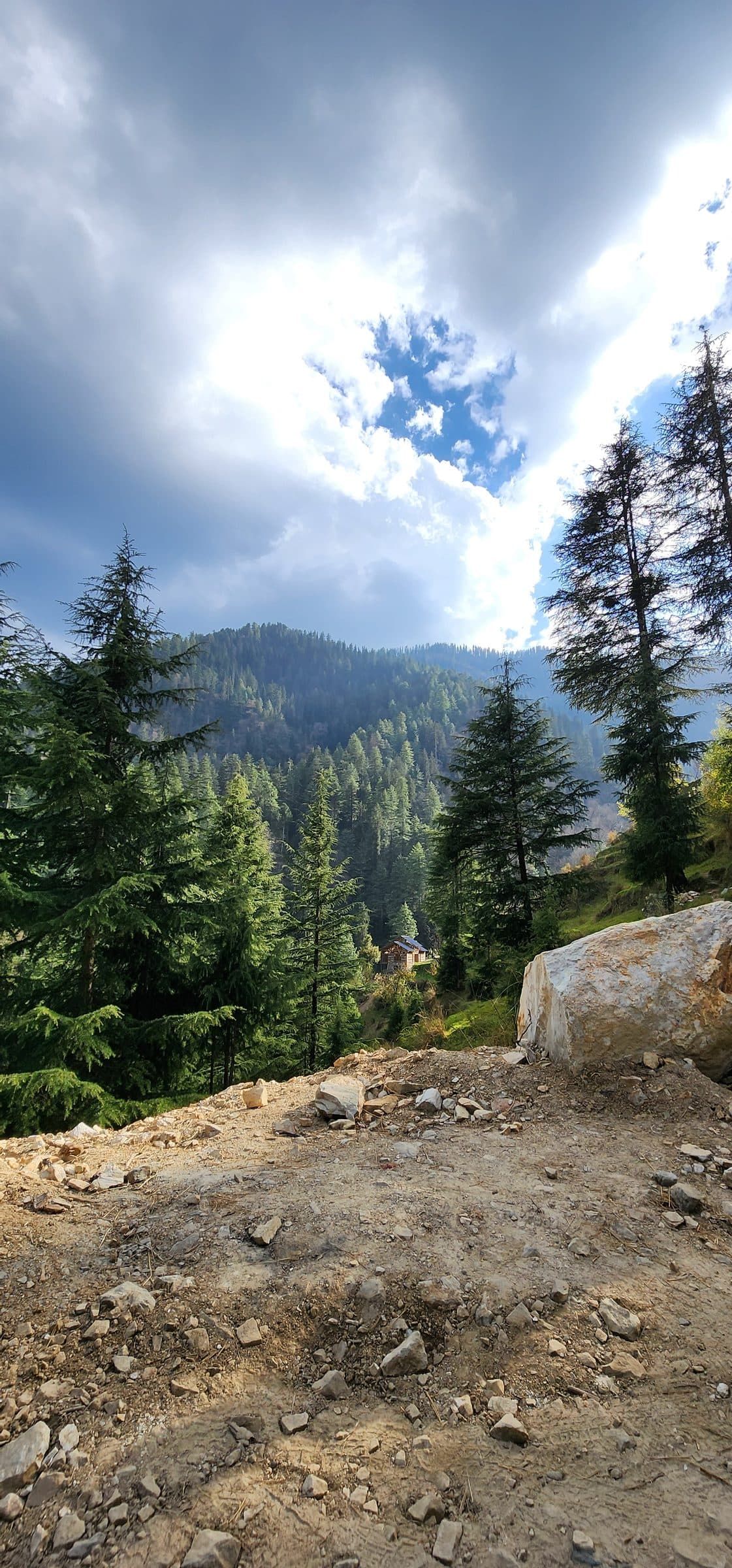
Rocky foreground with scattered pine trees and dense green forest stretching into the distance under cloudy sky
Where to Stay in Ghiyagi & Jibhi
Most stays are family-run wooden homestays and guesthouses built in traditional Kullu style. Ailyak Café & Stays is a standout—offering cozy rooms, a café serving local cuisine, and easy access to the river and village. Other options include heritage guesthouses, eco-resorts, and rustic cottages. Book ahead in peak seasons (October–November, March–April).
Weather in Ghiyagi & Jibhi Right Now (25 April 2026)
As of today, the weather is mild and pleasant. Expect daytime temperatures around 18–22°C and nights dipping to 8–12°C. Skies are mostly clear with occasional clouds. This is ideal weather for trekking, photography, and exploring the village. Monsoon arrives in July; avoid visiting in heavy rain due to landslide risks on NH305.
Carry cash—Jibhi has only one ATM; nearest is in Banjar (10 km).
Bring sturdy shoes for treks like Serolsar Lake and Chehni Kothi.
Get a trout fishing permit from Larji or Banjar before heading to the river.
Mobile networks are limited; BSNL works best.
Respect local customs and the slow pace of “Ailyak.”
Fill fuel in Banjar or Aut before arriving.
Why Choose Ghiyagi & Jibhi Over Other Himachal Destinations?
Jibhi and Ghiyagi offer an authentic, unhurried Himalayan experience. Unlike crowded hotspots, this valley preserves tradition, offers pristine nature, and invites you to slow down. Whether you’re trekking to Serolsar Lake, savoring trout by the river, or simply sitting on a wooden balcony watching the Tirthan flow, Jibhi feels like a return to stillness.
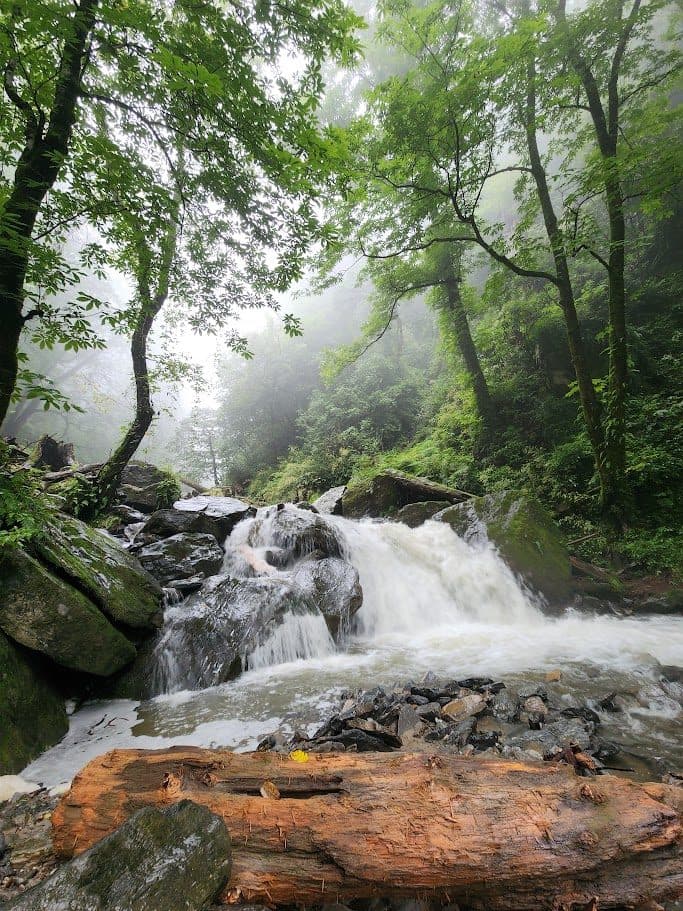
A flowing stream over rocks surrounded by dense green trees and heavy mist, near Ailyak Shoja
Source of This Information
All facts, distances, altitudes, and accessibility details are verified from official sources and local authorities in Kullu District, Himachal Pradesh. This guide reflects conditions as of Saturday, 25 April 2026.