The Quiet Road: Measuring Distance in Mountains, Not Just Kilometres
29 Jul 2025•3 min read
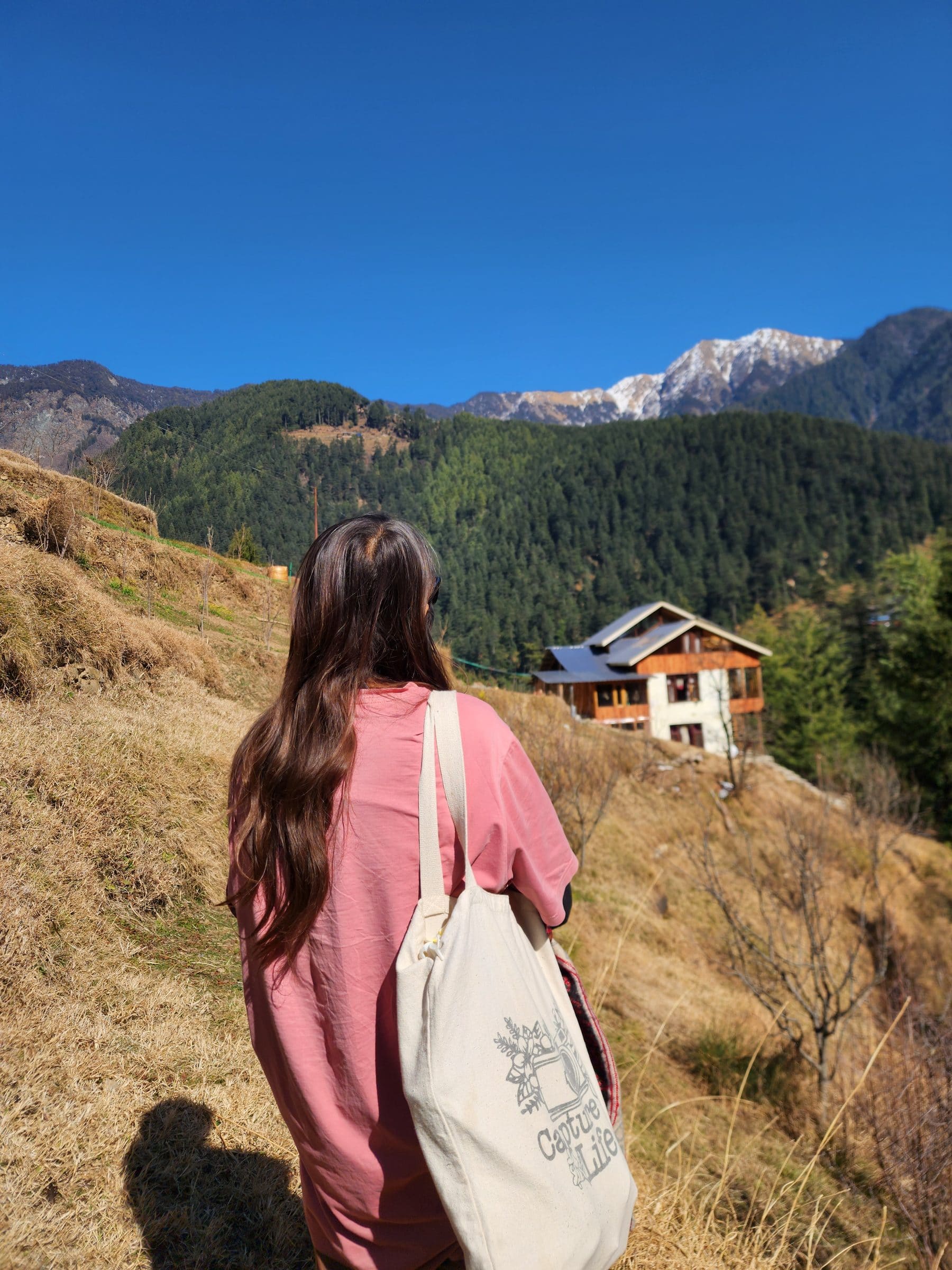
Jibhi to Kasol distance is 100 km (3–4 hrs). Compare travel times from Delhi, Manali, Aut Tunnel & more. Plan your Himalayan trip with local insights.
Share this guide
Jibhi to Kasol Distance: What You Need to Know
If you're planning a Himalayan trip through Himachal Pradesh, one of the most practical questions you’ll ask is: what is the Jibhi to Kasol distance? The answer is 100 km, and it typically takes 3 to 4 hours by road, depending on traffic, weather and road conditions. The route winds through Bhuntar, crosses the Aut Tunnel, and follows NH305 via Banjar — a scenic but narrow mountain highway that demands patience and caution.
This journey connects two distinct travel vibes: the meditative stillness of Jibhi Valley with the bohemian energy of Kasol. While Kasol draws backpackers and digital nomads, Jibhi offers a quieter rhythm — what locals call ailyak, a way of life that moves without rushing.
Delhi to Jibhi Distance: Your Long Haul Guide
The Jibhi distance from Delhi is 535 km, taking 12–13 hours by car via NH44 and NH21. Most travelers break the journey — either overnight in Chandigarh or Mandi — before tackling the final stretch through the Aut Tunnel.
Buses run from Delhi to Bhuntar (Kullu), from where you can hire a taxi to Jibhi (65 km, 2 hours). For a smoother trip, consider flying into Bhuntar Airport and driving the rest.
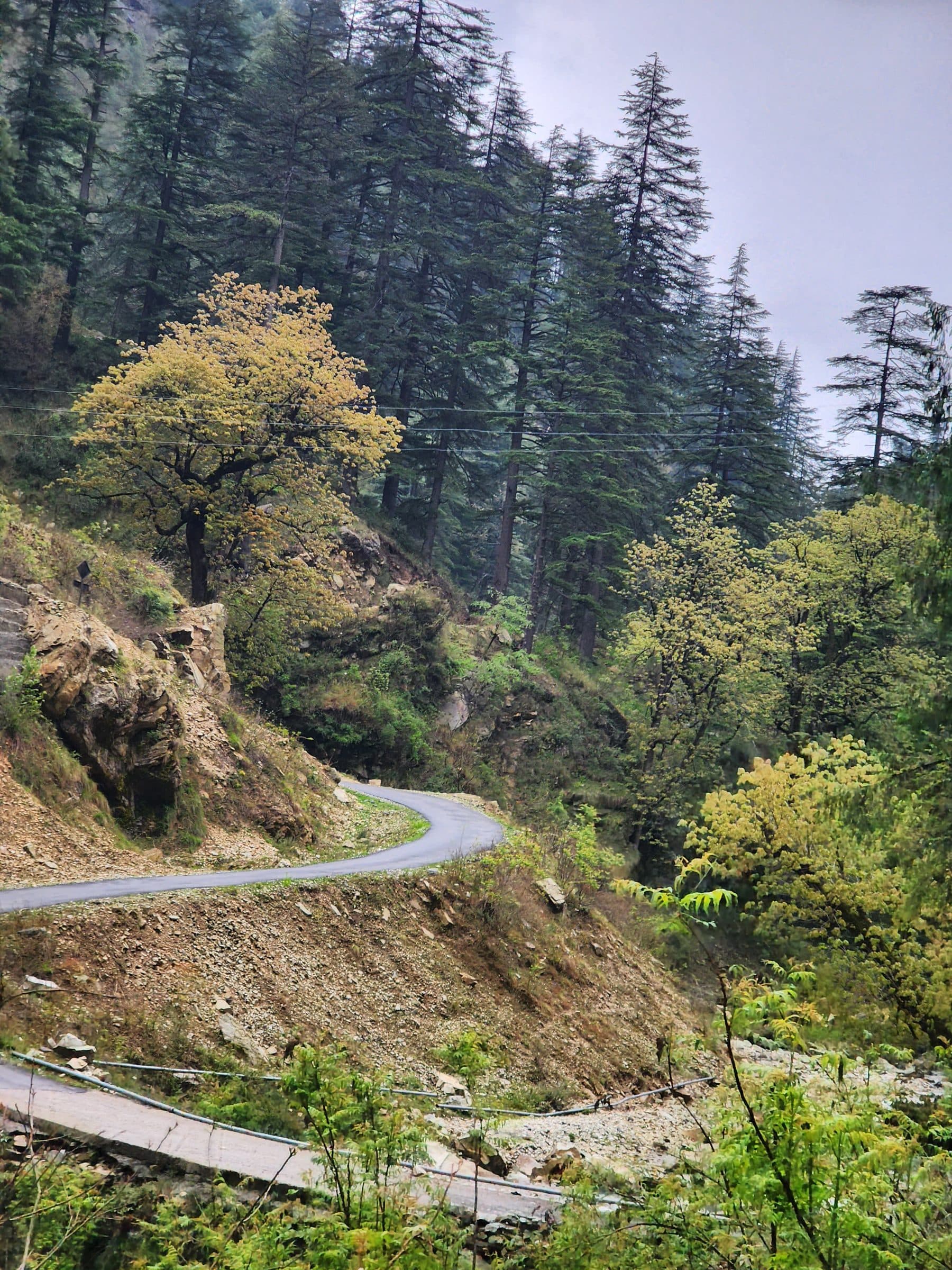
A winding road follows a steep, vegetated hillside in the mountains
A winding road follows a steep, vegetated hillside in the mountains
Manali to Jibhi Distance: A Scenic Mountain Drive
The Manali to Jibhi distance is 145 km, with a drive time of 4–5 hours. The route follows NH3 south to Kullu, then the Aut Tunnel before joining NH305 at Larji.
This is one of the most beautiful drives in Kullu — the Tirthan River accompanies you for much of the way, and the forests grow denser as you approach Jibhi. Many travelers combine Manali and Jibhi in a single itinerary, trading the crowds for quiet valleys.
Aut Tunnel to Jibhi Distance: The Final Stretch
The Aut tunnel to Jibhi distance is 30 km, taking about 1.5 hours via NH305 through Larji and Banjar. This stretch is crucial — once you pass the tunnel, you're entering the Tirthan Valley.
Fuel up and withdraw cash in Aut or Banjar, as Jibhi village has only one ATM. The road climbs steadily, with river views and wooden homestays dotting the hillsides.
Jibhi to Shoja Distance: Gateway to Jalori Pass
The Jibhi to Shoja distance is roughly 7 km by road, and it’s the last village before the ascent to Jalori Pass (3120m). Shoja sits at a slightly lower altitude than Jibhi and acts as the base for treks to Serolsar Lake and Raghupur Fort.
From Shoja, the narrow road to Jalori Pass begins — open only from May to October due to snow.
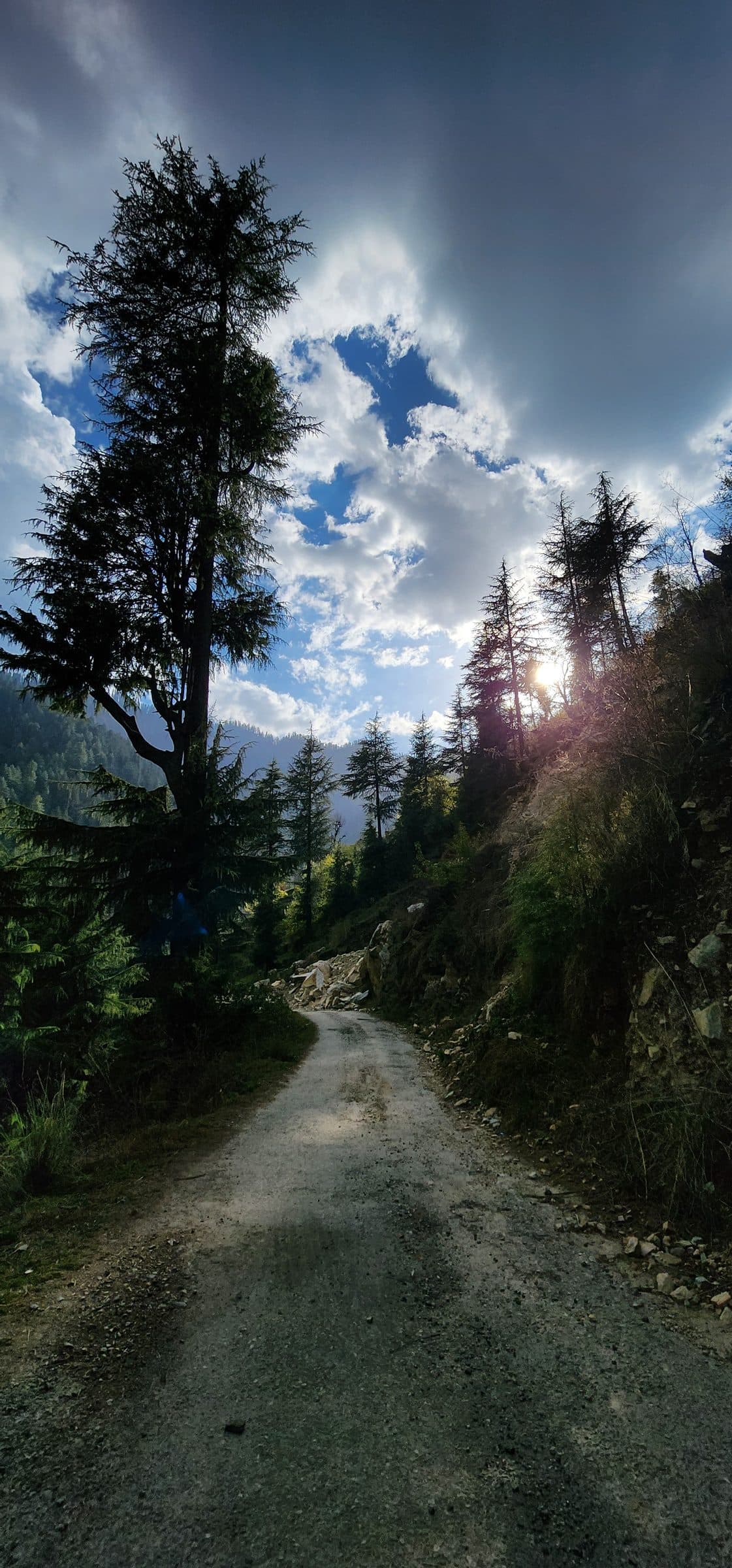
Dirt road winding through dense pine forest and mountains in Jibhi Valley
Other Key Distances to Jibhi
- Kullu to Jibhi distance: 80 km, ~3 hours
- Shimla to Jibhi: 218 km, 5–6 hours via Narkanda or Mandi
- Jogindernagar to Jibhi: 95 km, 3 hours (nearest railhead)
- Bhuntar Airport to Jibhi: 65 km, 2 hours
All roads to Jibhi pass through Banjar (10 km from Jibhi) — the last town with ATMs, pharmacies, and fuel stations. Plan accordingly.
Why Distance Means More Than Kilometres Here
In Jibhi, distance isn’t just measured in kilometres — it’s felt in the rhythm of the river, the pace of the walk to Jibhi Waterfall, or the slow climb to Chehni Kothi.
This is where Ailyak Stays & Experiences invites you — not just to rest, but to reset. Whether you're here for the treks, the trout fishing, or simply to breathe air scented with pine and damp earth, Ailyak offers soulful homestays in Jibhi, Shoja, and Seri, where slow living isn’t a trend — it’s tradition.
Wake up to apple blossoms (in March–April) or autumn hues (October–November), sip chai by a bonfire, or join a forest bathing walk curated to deepen your connection with the valley.
When you’re ready to trade motion for meaning, explore stays that honour the local ailyak at jibhi.in/partners.
Jibhi Trip Essentials
For planning routes, timing, and live conditions, use the core Jibhi guides:
How to Travel from Jibhi to Kasol
A step-by-step guide to traveling from Jibhi to Kasol by road, covering distance, route, and travel conditions.
Total Time: 4 hours
1
Check Road and Weather Conditions
Before departing, verify current weather and road status, especially during monsoon or winter, as mountain conditions can affect travel safety and duration.
2
Begin Your Journey on NH305 via Banjar
Start from Jibhi and head towards Banjar on NH305, a scenic but narrow mountain highway that requires cautious driving due to sharp turns and steep drops.
3
Cross the Aut Tunnel
Pass through the Aut Tunnel, a key segment connecting the Jibhi and Kasol route, ensuring your vehicle is in good condition for the uphill and downhill stretches.
4
Continue via Bhuntar to Kasol
After exiting the tunnel, proceed through Bhuntar and follow signs to Kasol, maintaining a steady pace as the road conditions vary between smooth and rough patches.
5
Arrive in Kasol
Covering approximately 100 km, reach Kasol in 3 to 4 hours, transitioning from Jibhi’s quiet valley atmosphere to Kasol’s vibrant, backpacker-friendly vibe.
Frequently Asked Questions
The jibhi to kasol distance is 100 km, and it typically takes 3 to 4 hours by road, depending on weather and road conditions. The route passes through Bhuntar, the Aut Tunnel, and Banjar on a scenic but narrow mountain highway.
The distance from Delhi to Jibhi is 535 km, taking approximately 12–13 hours by car via NH44 and NH21. Most travelers break the journey overnight in Chandigarh or Mandi before continuing to Jibhi.
The Manali to Jibhi distance is 145 km, with a drive time of 4–5 hours. The route follows NH3 to Kullu, then the Aut Tunnel before joining NH305 at Larji, offering scenic views along the Tirthan River.
The distance from Aut Tunnel to Jibhi is 56 km, taking about 1.5 hours via NH305 through Larji and Banjar. This stretch enters the Tirthan Valley, with river views and homestays along the way.
No, Jibhi village does not have an ATM. Travelers are advised to withdraw cash in Aut or Banjar before reaching Jibhi.
The distance from Jibhi to Shoja is approximately 7 km by road. It is a short drive and Shoja is considered the last village before reaching Jalori Pass.
Related reads
- The Road to Stillness: Why the Aut to Jibhi Distance is Worth Every Curve
Aut to Jibhi distance is 33 km via NH305. Discover travel times, road conditions, and why this Himalayan drive is worth every curve.
- The Slow Road to Jibhi: Distance, Drive Times, and Why It’s Worth Every Kilometre
Delhi to Jibhi distance is 535 km. Learn travel times, road routes, and why Jibhi’s slow rhythm makes the journey worth it.
- The Quiet Road to Jibhi: Distance, Routes, and Why the Journey Matters
Jibhi to Tirthan Valley distance explained—plus key routes from Delhi, Manali, Kasol & Aut Tunnel. Travel tips, road times, and why Jibhi is worth the journey.
- The Quiet Road to Jibhi: Why the Distance from Kullu, Manali, and Delhi Feels Like a Journey Back in Time
Kullu to Jibhi distance is 65 km (2.5 hrs). Get full travel guide: Manali, Delhi, Kasol routes, road conditions, and best time to visit Jibhi Valley in 2026.
- The Quiet Road to Jibhi: Why the Journey is Part of the Journey
Kullu to Jibhi distance is 145 km, 4–5 hours. Best travel guide with verified distances, routes, and tips for Jibhi Valley, Himachal Pradesh.
- The Slow Road from Manali to Jibhi: A Journey Through the Heart of Tirthan Valley
Manali to Jibhi distance is 145 km (4–5 hrs). Get route tips, weather advice, and discover slow stays in Tirthan Valley. Plan your 2026 trip.
Stay Updated
Subscribe to our newsletter for travel tips and updates about Jibhi.