Shringa Rishi Temple Jibhi – Guide to the Ancient Temple | Jibhi Valley Guide
Shringa Rishi Temple Jibhi: A Sacred Journey in the Heart of Tirthan Valley
Discover Shringa Rishi Temple Jibhi, top places to visit in Jibhi Valley, and travel tips for Jibhi Himachal Pradesh. Plan your 2026 trip with trusted local ins
Shringa Rishi Temple in Jibhi: All you need to know
Jibhi is more than a Himalayan hideaway—it’s a living tapestry of tradition, spirituality, and slow mountain life. Nestled in the Tirthan Valley at 2,250m, this quiet village pulses with the rhythm of ancient forests, apple blossoms, and the timeless stories of sages who once walked these paths. At its spiritual core stands the Shringa Rishi Temple, a wooden pagoda-kissed shrine dedicated to the sage Shringa, whose legacy still echoes through the valley’s valleys and festivals.
A visit here isn’t just about seeing a temple—it’s about stepping into a world where time moves like a mountain stream: slowly, unhurriedly, the way the locals call "Ailyak"—a term with no English equivalent, only meaning. Whether you're here in spring to see apple blossoms blush pink or in October to watch the valley ignite in golden hues, the temple offers a quiet anchor in the Himalayas.
Let’s walk through the sacred gate of Shringa Rishi Temple, uncover its story, and explore what makes Jibhi—this sacred sanctuary—a pilgrimage for both the soul and the wanderer.
What Is the Shringa Rishi Temple?
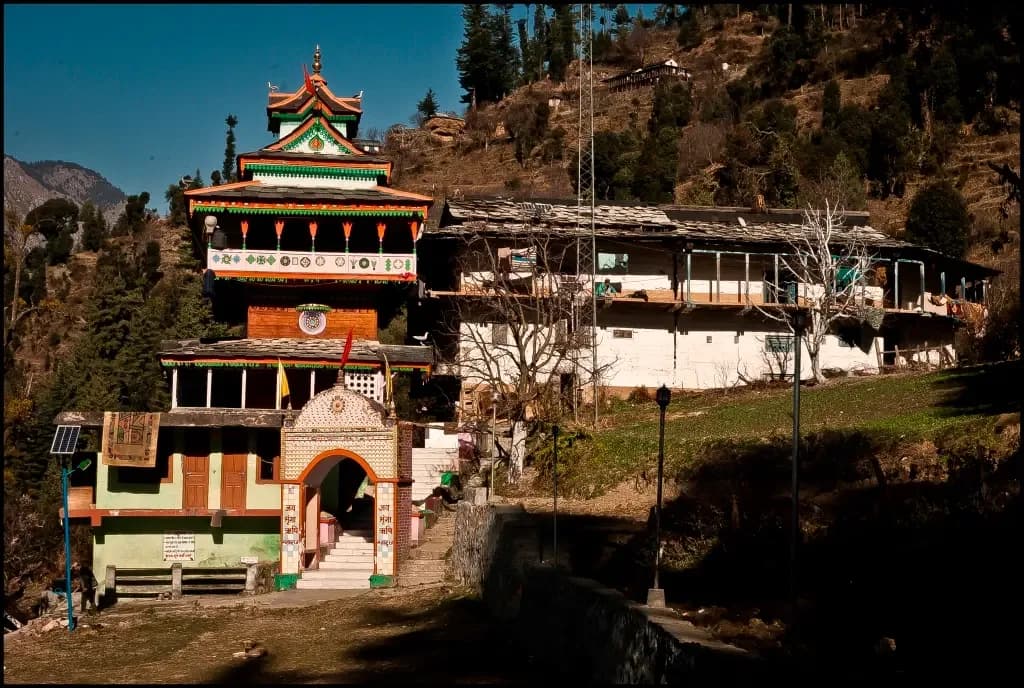
Stone gateway structure leading up to hillside buildings in Jibhi Valley
The Shringa Rishi Temple is one of the most revered spiritual sites in the Banjar valley, a living testament to the region’s deep-rooted faith and architectural heritage. Built in the traditional Kullu-style pagoda architecture—wood and stone interlocking in time-honored craftsmanship—the temple stands at the edge of Jibhi village, just 2 km away. The deity inside, Shringa Rishi, is carried in a ceremonial palanquin (doli) during local festivals, a sight that stirs both devotion and wonder.
Unlike many modern shrines, this temple breathes with the valley’s rhythms. It witnesses the turning of seasons: apple blossoms in March, monsoon mists in July, golden autumns in October, and snowy stillness in winter. The temple isn’t just a place of worship—it’s a mirror to Jibhi’s soul.
How to Visit Shringa Rishi Temple in Jibhi
A guide to experiencing the spiritual and cultural essence of the ancient Shringa Rishi Temple in Jibhi Valley.
Total Time: 1 hour
1
Reach Jibhi Valley
Travel to Jibhi, located in the Banjar valley of Himachal Pradesh, accessible by road from major nearby towns like Aut or Mandi, ideally during spring or autumn for pleasant weather and scenic beauty.
2
Locate the Temple
Head to the edge of Jibhi village, approximately 2 km from the main settlement, where the Shringa Rishi Temple stands in serene isolation amidst traditional Kullu-style architecture.
3
Enter with Reverence
Approach the temple through its stone gateway, respecting local customs and embracing the slow, mindful mountain rhythm known locally as 'Ailyak'.
4
Explore the Temple Architecture
Observe the traditional wooden pagoda design, crafted from interlocking wood and stone, reflecting the region’s ancient architectural heritage.
5
Learn About Shringa Rishi
Discover the legend of Sage Shringa, whose spiritual legacy is honored here, and understand his significance in local traditions and festivals.
6
Attend a Festival (if possible)
Plan your visit during a local festival to witness the deity carried in a ceremonial palanquin (doli), a powerful expression of devotion and community heritage.
Frequently Asked Questions
Shringa Rishi Temple is located in the Jibhi Valley, just 2 km from the village of Jibhi in Kullu District, Himachal Pradesh.
The temple is dedicated to the revered sage Shringa Rishi (also known as Shringi) and is one of the most important religious sites in the Tirthan Valley, blending spiritual significance with traditional Kullu-style architecture.
Jibhi is located in the Tirthan Valley of Kullu District, Himachal Pradesh, at an altitude of 2250 meters, and lies 10 km past Banjar along NH305.
Popular activities in Jibhi include visiting Shringa Rishi Temple, trekking to Chehni Kothi, driving to Jalori Pass and Serolsar Lake, trout fishing in the Tirthan River, and exploring apple orchards, especially during March blooms.
Yes, Jibhi offers both spiritual and natural experiences, from peaceful temple visits to forest bathing, riverside picnics, and mindful travel in a serene Himalayan setting.
Yes, trout fishing is allowed in the Tirthan River with a permit, which can be obtained from Banjar or Larji.
“The sage Shringa is said to have meditated here centuries ago, and his energy lingers in every wooden beam and carved panel,” shares a local priest. “People come not just to pray, but to feel the stillness.”
Where Is Shringa Rishi Temple Located?
You’ll find the Shringa Rishi Temple perched on a gentle rise above Jibhi village, surrounded by apple orchards and deodar trees. The temple is:
2 km from Jibhi village center
Accessible by a short walk or a 5-minute drive via the main road
There’s no grand signpost—just the unmistakable wooden pagoda silhouette rising above the rooftops, guiding you home.
How to Reach Shringa Rishi Temple from Delhi, Manali, or Other Destinations
Jibhi is a journey worth taking. From Delhi, the route winds through Chandigarh, Bilaspur, Sundernagar, and Mandi before climbing through the Aut Tunnel—the gateway to the valley. Total distance: 535 km, 12–13 hours.
From Manali, it’s a scenic 4–5 hour drive (145 km):
Manali → Kullu → Aut Tunnel → NH305 → Banjar → Jibhi
From Shimla, choose between the longer, panoramic route via Narkanda and Rampur (218 km, 5–6 hours) or the faster Mandi route.
Pro tip: Avoid monsoon months (July–August) due to landslides on NH305. Best to visit October–November for crisp air and golden foliage.
Best Time to Visit Shringa Rishi Temple & Jibhi
Jibhi is a year-round sanctuary, but each season offers a different face.
March–April: Apple blossoms paint the valley pink. Mild temperatures (10–20°C), perfect for walking and temple visits.
October–November: Post-monsoon clarity. Crisp air, golden oaks, and the festival season brings the temple to life with processions and prayer.
July–August: Heavy monsoon rains. Roads may be cut; the Tirthan River swells. Not ideal for temple visits due to slippery paths.
December–February: Snow blankets the valley. Jalori Pass closes, but Jibhi village remains accessible for snow walks and cozy stays.
The temple is most vibrant during local melas and Dussehra, when the deity is carried in procession—a rare cultural sight.
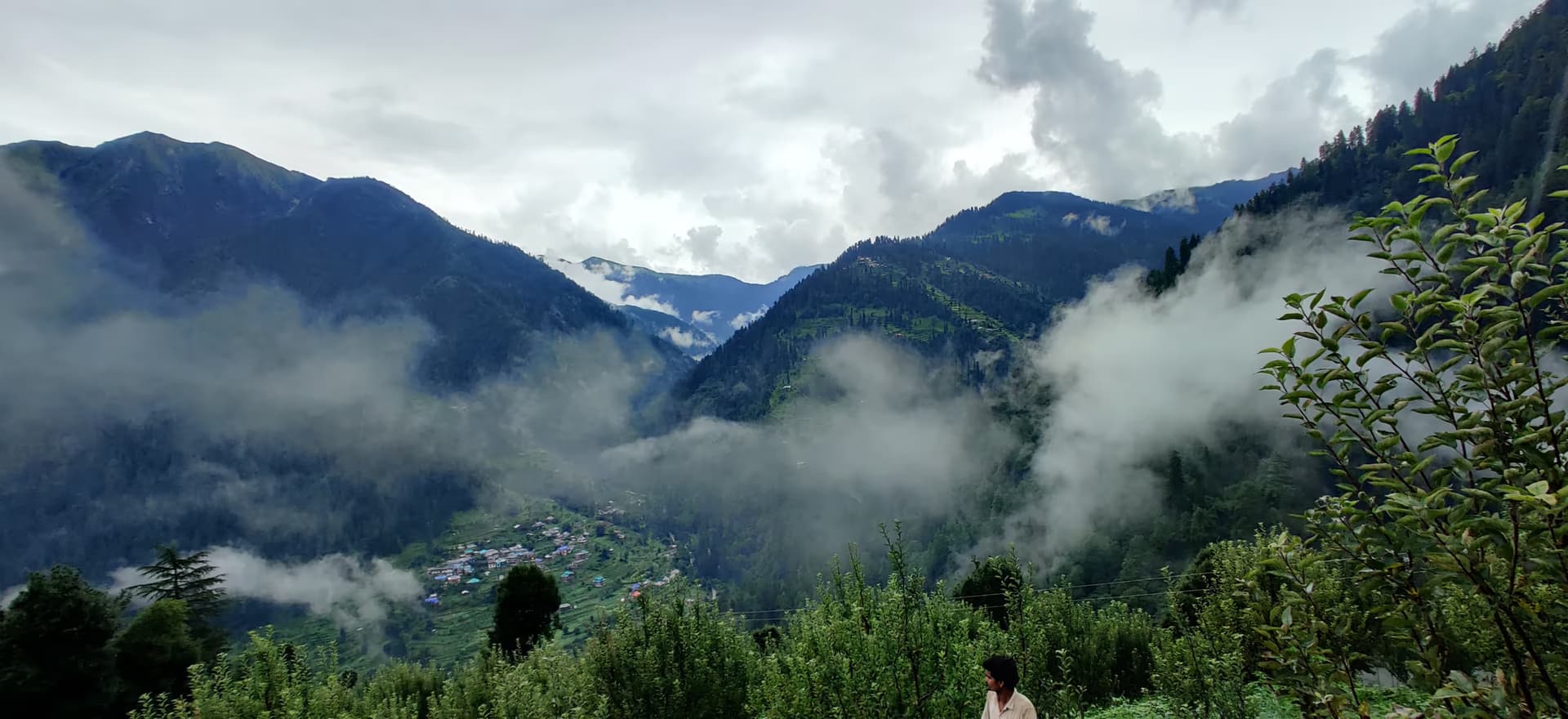
Layered mountain ranges covered in heavy fog and lush green forest
Things to Do Near Shringa Rishi Temple in Jibhi
The temple isn’t an island—it’s part of a spiritual and scenic ecosystem. Here’s what to explore nearby:
1. Walk the Village & Feel the Ailyak
Jibhi isn’t just a stop—it’s an experience. Wander the quiet lanes lined with traditional wooden homes, apple orchards, and wooden bridges over the Tirthan River. Locals call this unhurried pace "Ailyak"—a way of life without rush.
Try it: Sit by the river at dusk. Listen. Breathe. You’re not late. You’re exactly where you’re meant to be.
2. Visit Jalori Pass & Serolsar Lake
Just 14 km from Jibhi, Jalori Pass (3,120m) offers sweeping Himalayan views. From here, trek 5 km to Serolsar Lake, a sacred alpine lake at 3,100m, home to the Budhi Nagin deity. The forest trail is alive with birdlife—spot the Himalayan Monal or Koklass Pheasant.
Access: Open March–December. Road closes in winter due to snow.
3. Explore Chehni Kothi
Seven kilometers from Jibhi lies one of Himachal Pradesh’s tallest medieval towers: Chehni Kothi. Built 500–700 years ago, this nine-storey stone-and-wood fortress is earthquake-resistant and steeped in legend. A 45-minute uphill trek from the roadhead makes it a perfect blend of history and adventure.
4. Trout Fishing in the Tirthan River
The Tirthan is one of India’s cleanest trout rivers. Fishing requires a permit from the Fisheries Department at Larji or Banjar. Cast a line, feel the current—this is fly-fishing at its purest.
Grilled fish, rice, and vegetables served on a mat and in a bowl
Where to Stay in Jibhi: Heritage Homestays & Cafes
Jibhi isn’t about luxury—it’s about warmth. Most stays are family-run wooden homestays in traditional Kullu style, where you’ll wake to the sound of the river and the smell of woodsmoke.
Stay with Ailyak Café & Stays
Ailyak Café & Stays is a local favorite—a cozy wooden café and homestay that embodies the valley’s spirit. Sip on mountain herbal tea, enjoy homemade Himachali dishes, and sleep in rooms with valley views. It’s not just accommodation—it’s an invitation to slow down.
“At Ailyak, we don’t serve breakfast—we serve stillness,” says the owner.
Other Stays to Consider:
Wooden Heritage Homestays: Family-run, river-facing, with bonfires under starlit skies.
Eco-Lodges: Solar-powered, zero-waste, built into the forest edge.
💡 Tip: Carry cash. Jibhi has no ATM—withdraw in Banjar (10 km) or Aut (56 km).
What to Eat in Jibhi: The Soul of Himachali Cuisine
Jibhi’s food is mountain food—simple, hearty, and deeply local.
Siddu: Steamed yeast buns stuffed with walnuts or cottage cheese.
Chha Gosht: Slow-cooked lamb with yogurt and spices.
Dhaam: A traditional Kullu feast served on leaf plates—must-try during festivals.
Trout Curry: Fresh from the river, cooked in mustard oil and local herbs.
Pair it with apricot or apple wine from nearby orchards.
For a warm cup and homemade cake, visit Ailyak Café—a perfect post-temple pit stop.
Local Tips for Visiting Shringa Rishi Temple & Jibhi
Mobile Networks: BSNL has the best signal. Airtel works in most spots. Jio is patchy.
Electricity: Common cuts in monsoon—stays have backup inverters.
Permits: Trout fishing requires a permit from Larji or Banjar.
Cash: No ATMs—carry enough from Banjar or Aut.
Footwear: Wear sturdy shoes—paths around the temple and to Chehni Kothi are uneven.
Respect: Remove shoes before entering temple premises.
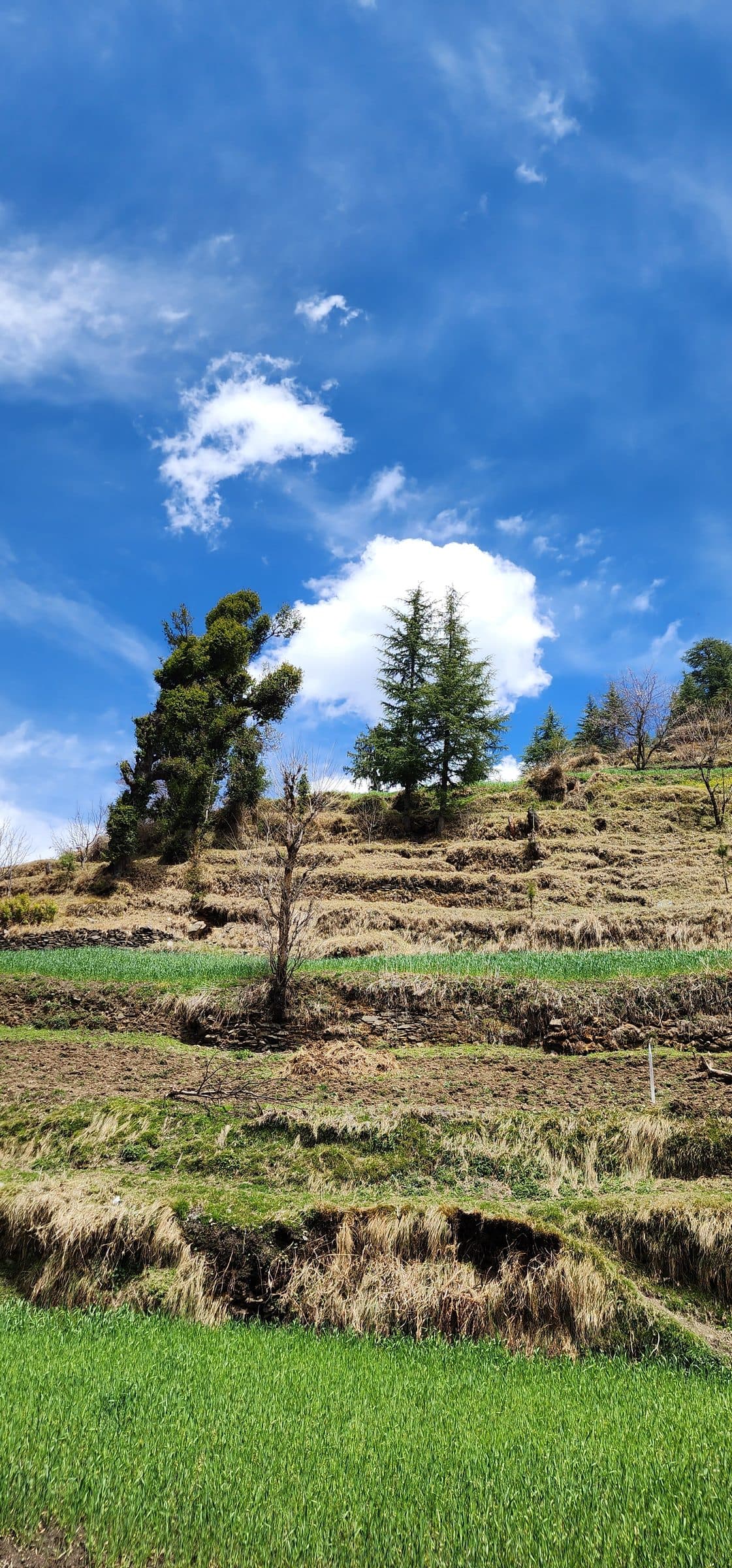
Hilly grassy terrain and trees under a bright blue sky
Why Jibhi Is More Than a Destination—It’s an Experience
Jibhi isn’t a place you visit—it’s a place you feel. The Shringa Rishi Temple is its spiritual heartbeat, but the valley’s magic lies in the quiet moments: the scent of pine, the rhythm of the river, the taste of fresh trout, the warmth of a homestay hearth.
It’s for those who want to escape the crowds, who crave slow travel, who believe in stillness.
“Jibhi doesn’t call you to climb mountains,” says a local guide. “It calls you to sit still and let the mountains climb into your soul.”
Plan Your Jibhi Journey
Ready to step into the stillness? Here’s how to get here and what to do: