Shoja in Which District: Kullu, Gateway to Jalori Pass. | Jibhi Valley Guide
Shoja, Himachal Pradesh: The Hidden Mountain Village Gateway to Jalori Pass
Shoja, Himachal Pradesh is in Kullu District — your guide to snow seasons, cultural experiences, and the perfect Jibhi & Shoja trip. Learn where to stay, eat, a
Shoja in Which District or Where is Shoja?
Nestled at a crisp 2,700 metres above sea level, Shoja village sits just 16 km from Jibhi in the Kullu district of Himachal Pradesh. This quiet hamlet acts as the primary gateway to Jalori Pass, the highest motorable pass in the Kullu region (3,120 m). From here, the road climbs through dense deodar and oak forests, offering glimpses of snow-capped peaks even before you reach the pass. It’s a place where the rhythm of life slows to the pace of the mountains—what locals call Ailyak, a concept with no direct English equivalent.
Shoja connects two worlds: the fertile Tirthan Valley below and the high Himalayas above. It’s calmer than Jibhi, yet close enough for a quick drive to homestays, trout streams, and the sacred Serolsar Lake, just 19 km away. Whether you're here for a short break or a long retreat, Shoja offers an unhurried entry point to one of Himachal’s most pristine corners.
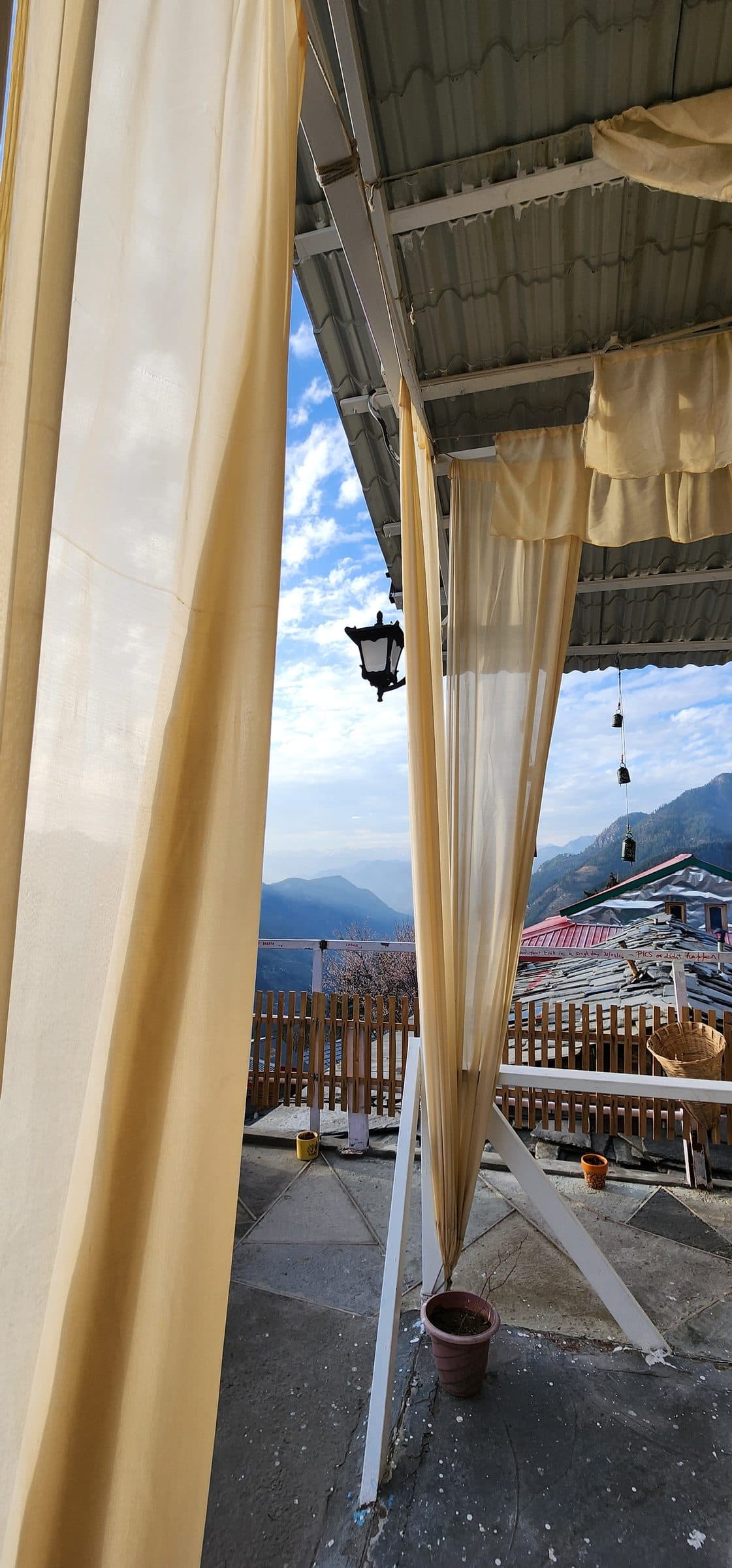
Yellow curtains frame a view of distant mountains and sky
Why Shoja in Himachal Is Suddenly Everywhere on Travel Reels?
From Instagram reels to travel vlogs, Shoja has become the darling of the Himalayas—not because it’s new, but because it’s real. Unlike crowded destinations where every moment is staged, Shoja feels untouched. The mist-clad cedar forests, the wooden villages, and the way sunlight breaks over Jalori Pass at dawn—it’s the kind of scenery that stops scrollers in their tracks.
Here’s what’s making Shoja go viral:
The Jalori Pass sunrise: Few places in Kullu offer such a dramatic horizon. At 3,120 m, the pass is a stage set for golden-hour photography, with the Zanskar and Pir Panjal ranges glowing in the distance.
Minimalist stays: Family-run wooden cottages and eco-homestays in Shoja and Jibhi let travelers live like locals. Many have open terraces where you can sip masala chai while watching the valley wake up.
How to Experience Shoja and Jalori Pass
Discover the serene village of Shoja in Kullu district and explore its breathtaking gateway to Jalori Pass.
Total Time: 1 hour
1
Reach Shoja Village
Travel to Shoja, located 16 km from Jibhi in the Kullu district of Himachal Pradesh. The village sits at an elevation of 2,700 metres and is accessible by road.
2
Explore Shoja's Natural Beauty
Spend time in the peaceful surroundings of Shoja, surrounded by deodar and oak forests. Enjoy the slow mountain rhythm known locally as Ailyak.
3
Drive to Jalori Pass
Take the motorable road from Shoja to Jalori Pass, the highest in the Kullu region at 3,120 metres. Witness panoramic views of snow-capped peaks, including the Zanskar and Pir Panjal ranges.
4
Capture the Sunrise
Wake up early to witness the golden sunrise at Jalori Pass, a favorite among photographers and travelers for its dramatic lighting and scenic beauty.
5
Visit Nearby Attractions
Take a short trip to nearby spots like Serolsar Lake (19 km away) or return to Jibhi for trout fishing, homestays, and valley views.
Frequently Asked Questions
Shoja is located in the Kullu District of Himachal Pradesh, specifically in the Banjar subdivision.
Shoja is 16 km from Jibhi, accessible via a 45-minute drive along NH305 through pine-covered slopes and scenic valley views.
Yes, Shoja is the final motorable settlement before the steep climb to Jalori Pass, which sits at 3120 meters.
Snowfall in Shoja usually begins in late November and lasts through February, with peak snow cover from December to early February.
As of 12 April 2026, it is not snowing in Shoja. The winter season has ended, and the area is experiencing mild spring weather.
Shoja is situated at an altitude of 2700 meters, making it higher than Jibhi and ideal for views of snow-capped peaks and winter snowfall.
Adventure meets stillness: A 5-km forest trek to Serolsar Lake, a sacred alpine waterbody, or a short drive to Chehni Kothi, one of Himachal’s tallest medieval towers, offers both thrill and tranquility.
Food with a story: Local dhabas serve freshly caught trout from the Tirthan River, slow-cooked Himachali thukpa, and wild berry jams—meals that taste like the mountains themselves.
Tourists aren’t just visiting Shoja; they’re living the Ailyak dream—where time isn’t measured in minutes, but in sunsets and steaming cups of tea.
Things to Do in Shoja & Nearby
From cultural gems to high-altitude adventures, Shoja and its surroundings offer something for every traveler.
Drive up to Jalori Pass (3,120 m)
A 45-minute scenic drive from Shoja takes you to the highest motorable pass in Kullu. Stop at roadside dhabas for steaming maggi and chai, then soak in panoramic views of the Himalayas. The pass connects Kullu to Shimla’s Rohru region and is open from May to October.
Trek to Serolsar Lake (3,100 m)
A 5-km, 2-hour forest trek from Jalori Pass leads to a sacred alpine lake, home to the Budhi Nagin deity. The trail winds through deodar and oak forests alive with bird calls—spot the Himalayan Monal or Koklass Pheasant if you’re lucky.
Visit Chehni Kothi
Just 7 km from Jibhi (a 1.5-hour trip including a 45-minute trek), this 9-storey medieval tower is one of Himachal’s tallest traditional structures. Built with wood, stone, and mud, it’s a testament to earthquake-resistant Kullu-Kinnauri architecture. The uphill trek is steep but rewarding for history lovers.
Trout fishing in the Tirthan River
The Tirthan is one of India’s cleanest rivers, teeming with rainbow and brown trout. A permit from the Fisheries Department at Larji or Banjar is required. Guides can help you cast a line and cook your catch over an open fire—a meal you’ll remember long after.
Savor Café Culture in Shoja & Jibhi
Forget Instagram cafés—these spots are about stillness, warmth, and mountain views.
Ailyak Café (Jibhi): A cozy wooden space where the house special is slow-brewed coffee and apple pie made with valley-grown apples.
Pass Café (Shoja): Famous for its trout burgers and views of Jalori Pass. Don’t miss the ginger-honey tea.
Woods Café (Jibhi): A family-run spot with a fireplace, serving momos stuffed with local greens and wild berry jam.
Explore Jibhi’s Apple Orchards & Heritage Walks
March–April brings apple blossoms, turning Jibhi into a pastel dream. Walk through orchards, sample fresh juice, and visit wooden heritage homes that tell stories of the valley’s past.
Birdwatching in the Great Himalayan National Park Buffer
The park begins at the Tirthan River, and Shoja sits in its buffer zone. Early mornings are best for spotting the elusive Himalayan Monal, Western Tragopan, or Bar-tailed Treecreeper.
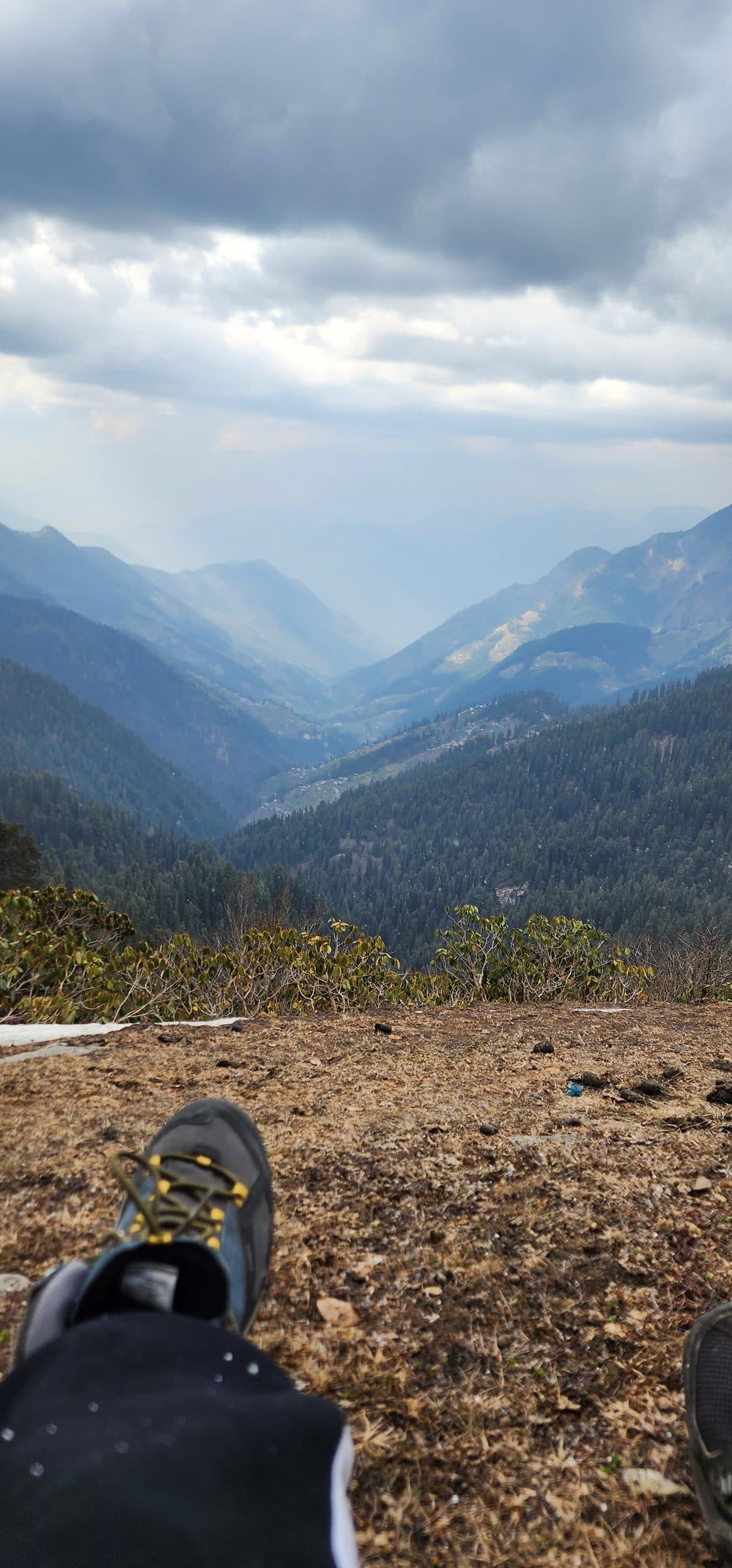
View of rolling green mountains and forested valleys under a cloudy sky
Shoja Trip Packages & Stays
Planning a trip to Shoja? You’re in luck—Shoja offers curated packages that blend adventure, culture, and stillness.
Shoja Trip Package: Includes 2 nights in a wooden homestay, guided trek to Serolsar Lake, trout fishing permit, and breakfast with mountain views. Perfect for couples, solo travelers, and families.
Jibhi & Shoja Combo: A 4-day escape covering Jibhi’s apple blossoms, Shoja’s snow (if in season), and a day at Jalori Pass.
Winter Snow Package: For December–February trips, includes snow boots, bonfire setups, and guided snowy walks.
Where to stay:
Place
Type
Best For
Price Range
Shoja
Eco-homestays, wooden cottages
Quiet, high-altitude views
₹1,500–₹3,500/night
Jibhi
Family-run guesthouses
Trout fishing, orchards, cafes
₹1,200–₹2,800/night
Jalori Pass (seasonal)
Basic dhabas
Sunrise views, quick stop
₹500–₹1,200
Pro tip: Book homestays in advance, especially during October–November (foliage season) and December–February (snow). Cash is king here—Jibhi and Shoja have no ATMs; withdraw from Banjar (10 km) or Aut (56 km).
How to Reach Shoja
Getting to Shoja is half the adventure. Here are the best routes from major hubs:
From Delhi (535 km, 12–13 hours)
Take NH44 to Chandigarh, then NH21 via Bilaspur, Sundernagar, Mandi → Aut Tunnel → NH305 to Banjar → Jibhi → Shoja. Overnight buses to Aut or Bhuntar are a good option if you don’t want to drive at night.
From Manali (145 km, 4–5 hours)
Head south on NH3 to Kullu → Aut Tunnel → NH305 via Banjar → Jibhi → Shoja. The route is scenic but winding—perfect for acclimatizing to the altitude.
From Shimla (218 km, 5–6 hours)
Two routes: via Narkanda–Rampur (scenic, longer) or via Mandi (faster). Both converge near Aut Tunnel.
By air/train
Fly into Bhuntar Airport (Kullu-Manali) (65 km, 2 hours) or take the train to Jogindernagar (95 km, 3 hours), then hire a taxi.
Road conditions: NH305 is prone to landslides in July–August. Check weather updates before traveling.
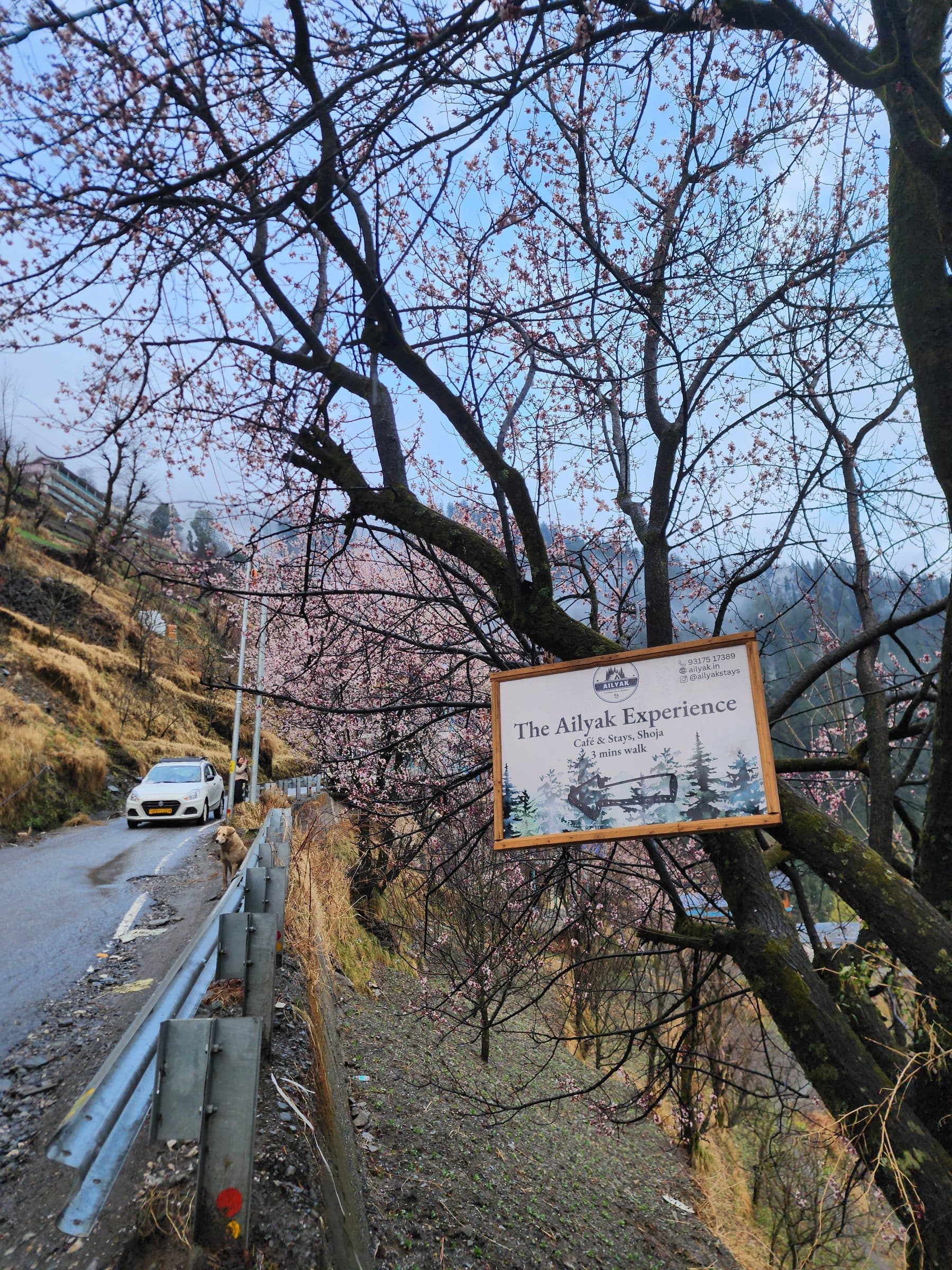
View of a road bordered by trees and a guardrail in the Jibhi Valley.
Shoja in April: What to Expect
April is a sweet spot in Shoja—spring has arrived, but the crowds haven’t. Here’s what the month offers:
Weather: Mild days (12–20°C) and cool nights (5–10°C). Light woolens suffice.
Nature: Apple orchards bloom in shades of pink and white, and the forest floor is carpeted with wildflowers. The Tirthan River swells with snowmelt, perfect for trout fishing.
Treks: Jalori Pass road is open, but the pass itself may still have snow patches. Serolsar Lake trek is lush and green.
Festivals: Local events like Baisakhi (mid-April) bring folk music and dance to villages.
Crowds: Thin—ideal for photographers and those seeking solitude.
April is perfect for travelers who want to experience Shoja’s charm without the peak-season rush.
Local Tips for Shoja & Jibhi
Cash is king: Withdraw money in Banjar or Aut before arriving.
Network: BSNL has the best signal; Airtel works in most spots. Jio is patchy.
Electricity: Cuts are common in monsoon months (July–August). Most stays have inverters.
Permits: Trout fishing requires a permit from the Fisheries Department at Larji or Banjar.
Dress code: Layer up—mornings and evenings are chilly even in summer.
Cultural etiquette: Greet locals with a smile and a "Namaste." Ask before photographing homes or people.
Pack smart: Waterproof backpack, sturdy shoes, sunscreen, and a reusable water bottle.
Shoja vs. Jibhi: Which Should You Stay In?
Both villages offer unique experiences, and many travelers split their time between them.
Shoja
Jibhi
Quieter, higher altitude (2,700 m)
Lower, cozier (2,250 m)
Gateway to Jalori Pass and Serolsar Lake
Gateway to trout fishing, orchards, and heritage walks
Fewer cafes and stays
More homestays, cafes, and local eateries
Better snow views in winter
Better apple blossom views in spring
Stunning sunrises at the pass
Stunning sunsets over the valley
Ideal for adventure seekers and photographers
Ideal for foodies, culture lovers, and families
Stay in Shoja if you want high-altitude views, fewer crowds, and easy access to Jalori Pass.
Stay in Jibhi if you prefer more amenities, trout fishing, and a slower pace.
Many travelers stay in Jibhi and take day trips to Shoja—it’s only 16 km away.
Shoja & Snow?
Winter transforms Shoja into a snow globe come to life. From December to February, the village and Jalori Pass (when accessible) are dusted in white, offering a different kind of magic. Here’s what to expect:
Snow at Shoja (2,700 m): Light to moderate snowfall turns the village into a fairy tale. The cedar forests wear a white blanket, and the air smells of wood smoke and pine. While heavy snow can disrupt road access from Jibhi, locals clear paths quickly and homestays often provide snow boots and hot water bottles.
Jalori Pass access: The pass itself closes from December to Feburary due to heavy snow and avalanche risk, but nearby areas like Shoja and Jibhi remain open for snow tourism. You can enjoy snowy walks, sleigh rides in nearby meadows, and cozy bonfires under the stars.
Best months for snow views: Plan a trip between mid-December and early February for the thickest snow. March sees melting snow, turning trails into muddy streams—still scenic, but less powdery.
What to pack: Waterproof boots, thermal layers, hand warmers, and a good camera. Mobile networks (BSNL strongest) are spotty, so download offline maps and carry a power bank.
If you’re chasing snow without the crowds of Shimla or Manali, Shoja is your quiet haven.
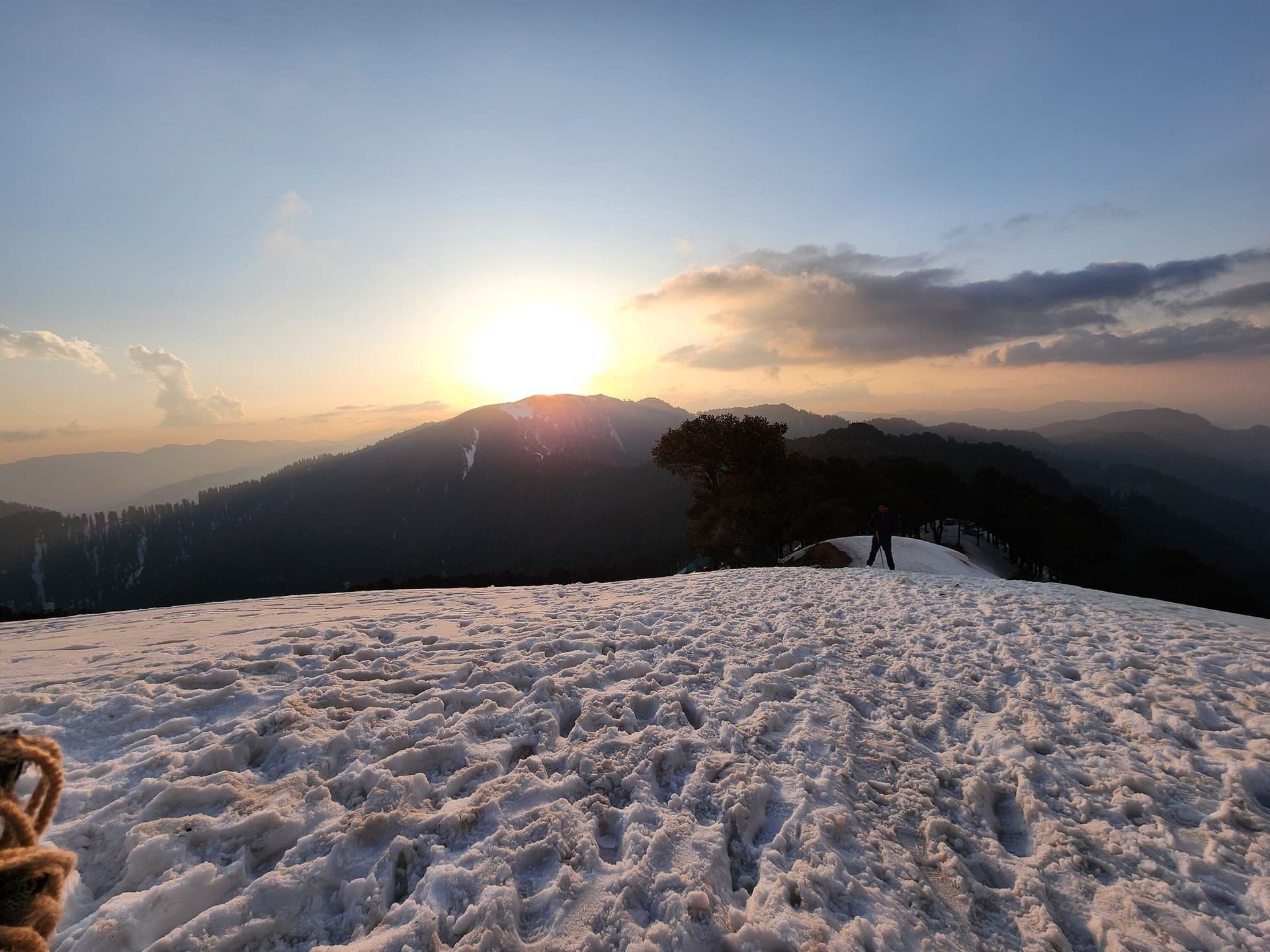
Snow-covered mountains and silhouettes of trees under a bright sky
Shoja in Which District: The Bottom Line
Shoja is in the Kullu district of Himachal Pradesh, a region known for its emerald valleys, snow-capped peaks, and warm hospitality. It’s not just a stopover—it’s a destination where time slows, stories are shared over steaming cups of tea, and every turn reveals a new shade of green or white.
Whether you’re here for the Jalori Pass sunrise, the Serolsar Lake trek, or just the chance to live the Ailyak way, Shoja delivers. And with its growing reputation as a travel reel favorite, now’s the time to experience it before the crowds catch up.