Manali to Jibhi Distance: How Far & How to Reach | Jibhi Valley Guide
Manali to Jibhi Distance & Travel Guide: Road Conditions, Time, and Best Routes (April 2026)
Manali to Jibhi distance is 145 km (4–5 hrs). Get driving tips, route details, weather, and best time to visit Jibhi Valley in April 2026.
Reaching Jibhi: Complete Guide
Jibhi’s mountain serenity begins with the journey. Whether you’re driving the Manali to Jibhi distance, flying into Kullu-Manali Airport, or taking the train, knowing the exact Manali to Jibhi distance, Delhi to Jibhi distance, and road conditions can make the difference between a smooth Himalayan retreat and a stressful detour.
Located in the tranquil Tirthan Valley at 2250m, Jibhi is one of Himachal Pradesh’s best-kept secrets — a place where wooden homestays perch along the Tirthan River, trout fishers cast their lines, and the local way of life thrives at an unhurried pace called Ailyak. But getting there is part of the adventure.
Below, you’ll find verified distances, travel times, and reliable routes from Manali, Delhi, Chandigarh, Shimla, and nearby airports and train stations. We’ve included road conditions, seasonal warnings, and insider tips so you can plan your trip with confidence — no surprises, just mountain magic.
Why Distance Matters in Jibhi Valley
The Jibhi Distance from Delhi and Jibhi to Manali distance aren’t just numbers — they define your experience. Shorter routes feel like escapes; longer ones become immersive journeys through pine forests, apple orchards, and alpine meadows. The Aut to Jibhi distance (30 km) is one of the most scenic legs, leading you through the Aut Tunnel and into the quieter side of Kullu.
Jibhi isn’t on the main Manali-Kullu tourist trail. That’s intentional. It’s a place for travelers who want to slow down — to sip chai in a wooden café, hike to Serolsar Lake, or fish for trout in the clear Tirthan River. But to reach it, you’ll need the right route.
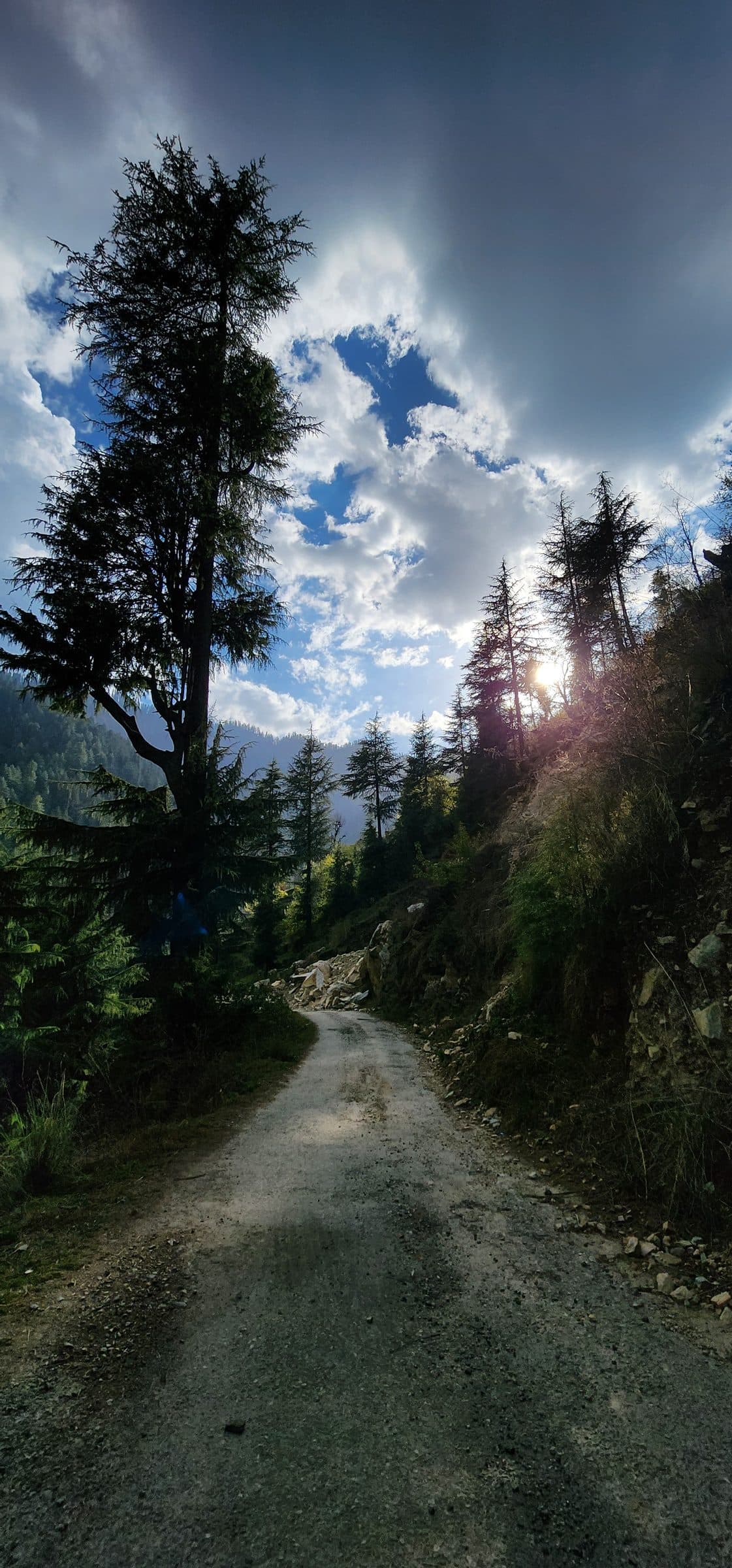
Dirt road winding through dense pine forest and mountains in Jibhi Valley
A step-by-step guide to reaching the serene Jibhi Valley from Manali via road.
Total Time: 4 hours
1
Start from Manali
Begin your journey from Manali, heading south on NH3 toward Kullu.
2
Drive to Kullu
Cover approximately 50 km to reach Kullu, passing through scenic pine forests and river valleys.
3
Pass through the Aut Tunnel
Continue from Kullu for about 20 km and pass through the Aut Tunnel, a key landmark on this route.
4
Proceed to Jibhi
Drive the remaining stretch through winding mountain roads, covering a total distance of 145 km to reach Jibhi.
Frequently Asked Questions
The Manali to Jibhi distance is 145 km, taking approximately 4–5 hours by car via NH3 and NH305.
The drive from Manali to Jibhi typically takes 4–5 hours, depending on road conditions and stops, with smoother travel expected in April due to clear roads and good weather.
No, Jibhi village has no ATM. Travelers should withdraw cash in advance from larger towns like Banjar or Aut.
The distance from the Aut Tunnel to Jibhi is 56 km, taking about 1.5 hours via NH305 through Larji and Banjar.
The recommended route from Delhi to Jibhi is via NH44 to Chandigarh, then NH21 through Bilaspur, Sundernagar, and Mandi, followed by the Aut Tunnel and NH305 to Jibhi.
Yes, many travelers combine Jibhi and Kasol, with the Jibhi to Kasol distance being 100 km and taking 3–4 hours by road via Bhuntar and the Aut Tunnel.
Travel time:
Route:
This is the most popular route for travelers already in Manali or flying into Bhuntar Airport. It’s well-paved and direct, but can get busy with traffic during peak season (April–June, October–November).
🚗 Pro tip: Start early in the morning to avoid afternoon traffic near Kullu. The Kullu to Jibhi distance ends with a serene drive through the Banjar valley, where apple orchards line the road and the Tirthan River glistens below.
“The drive from Manali to Jibhi feels like entering a different world — quieter, greener, more alive with local rhythm.”
Delhi → Jibhi distance: 535 km
Travel time: 12–13 hours
Route: NH44 to Chandigarh → NH21 via Bilaspur, Sundernagar, Mandi → Aut Tunnel → NH305 → Banjar → Jibhi
The Jibhi distance from Delhi is long, but the route is scenic and well-connected. Some travelers break the journey overnight — either in Chandigarh, Shimla, or Mandi — to avoid fatigue.
🚍 Best option: Take an overnight Volvo or HRTC bus from Delhi to Chandigarh or Aut. From Chandigarh, it’s just 290 km and 7–8 hours to Jibhi via NH21 and Aut Tunnel.
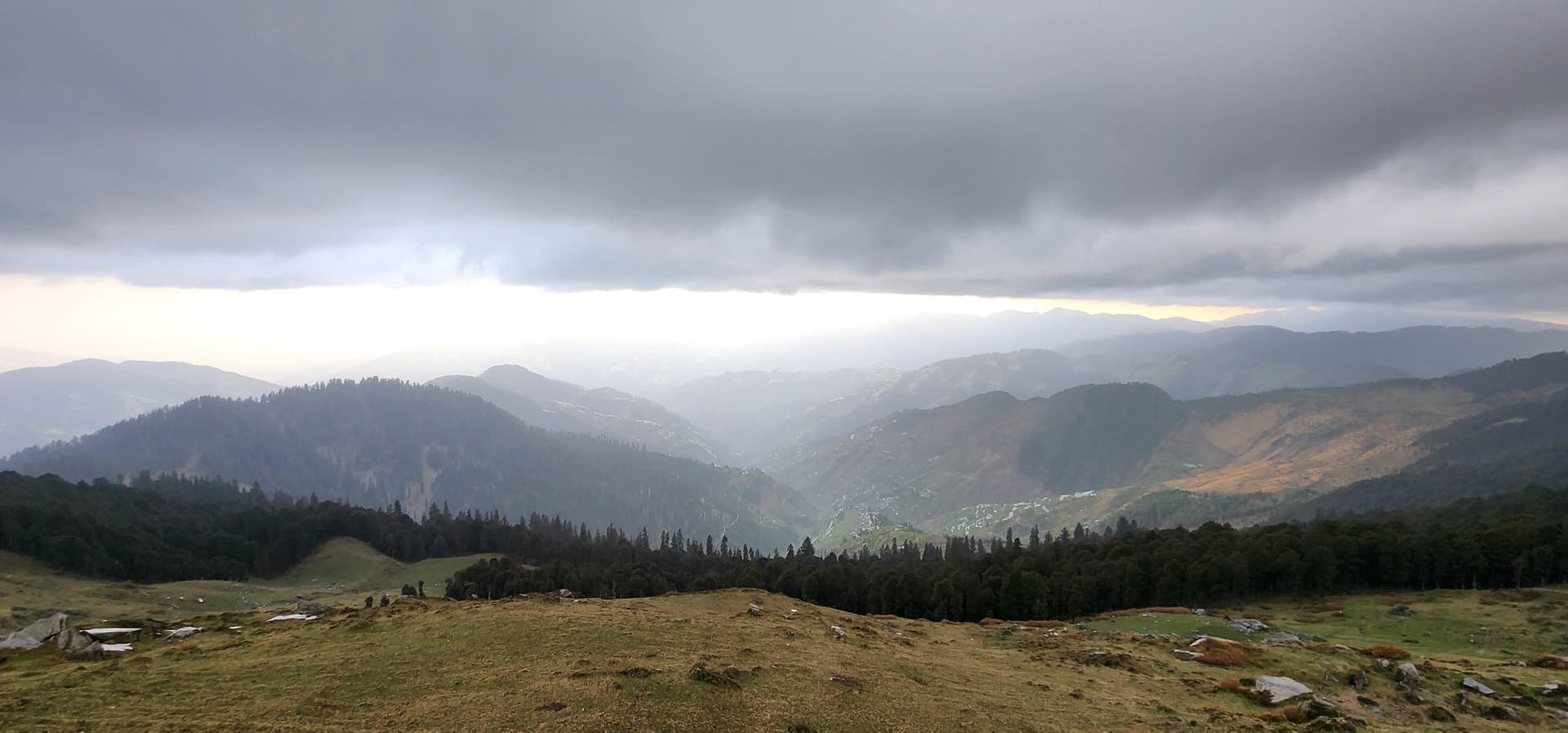
Rolling, forested hills in Jibhi Valley covered by heavy mist and fog
“Driving from Delhi to Jibhi is a pilgrimage for the slow traveler. The roads climb from plains to Himalayan peaks, passing orchards, temples, and ancient stone bridges.”
While Kasol to Jibhi distance might seem short, the route winds through the mountains, taking you over the Aut Tunnel and into the Parvati Valley. These two villages offer very different vibes: Kasol is known for its cafes and backpacker culture; Jibhi is for those seeking stillness, heritage, and nature.
🚐 Transport tip: Shared taxis run between Jibhi and Kasol via Banjar and Aut, but services are infrequent. It’s best to book a private car or arrange transport in advance.
“The Jibhi to Kasol Distance isn’t just about kilometers — it’s about crossing from the serene Tirthan Valley into the lively beats of Parvati. But both are equally magical.”
Jibhi to Shoja Distance & the Hidden Gem Connection
Jibhi → Shoja distance: 10 km
Travel time: 40 minutes
Route: NH305 → Shoja (via Deo Tibba views)
Shoja is Jibhi’s quieter neighbor — a high-altitude meadow with panoramic Himalayan views. The Jibhi to Shoja distance is short, but the road is narrow and winding. It’s ideal for a half-day trip or a stop on your way to Jalori Pass.
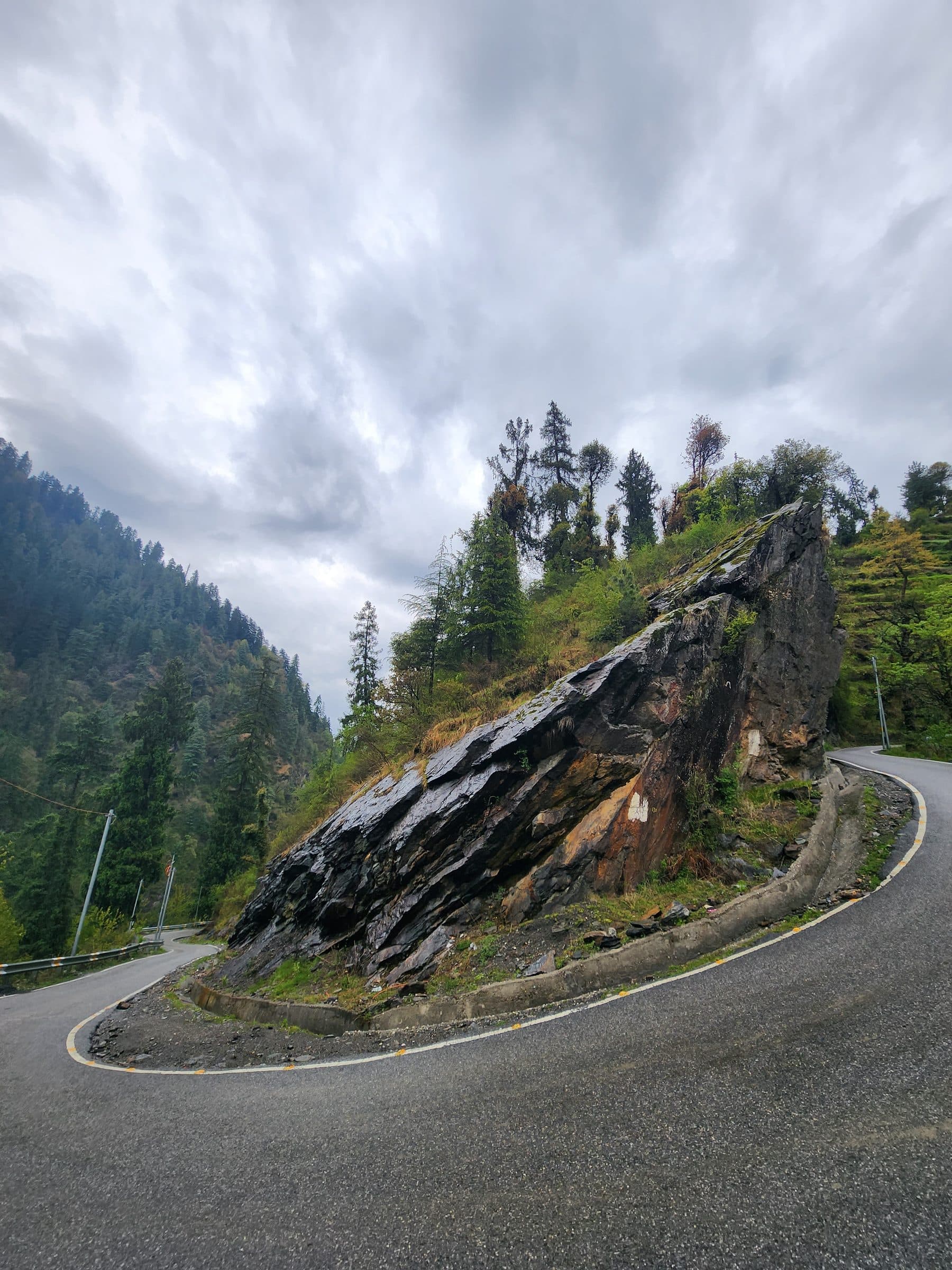
A road curves along a rocky, forested hillside under an overcast sky
“Shoja is where the Himalayas feel close enough to touch. The Jibhi to Shoja distance is just 34 km, but the silence and views make it feel like another country.”
Jibhi is remote, but accessible. Here’s how to get there from every major gateway:
✈️ By Air: Closest Airport – Bhuntar (Kullu-Manali Airport)
Bhuntar Airport → Jibhi distance: 65 km
Travel time: 2 hours
Route: Airport → NH305 via Aut Tunnel → Banjar → Jibhi
Best for: Travelers flying into Kullu-Manali from Delhi, Chandigarh, or Shimla
Note: Few direct flights; most connect via Delhi. From the airport, rent a taxi or take a shared ride to Jibhi.
🚂 By Train: Nearest Railhead – Jogindernagar
Jogindernagar → Jibhi distance: 95 km
Travel time: 3 hours
Route: Train to Jogindernagar → Taxi to Jibhi via Mandi → Aut Tunnel → Banjar
Best for: Those preferring train travel over long road journeys
Note: Jogindernagar is a small station; onward transport must be arranged in advance.
🛣️ By Road: The Scenic Route (Recommended)
Whether you’re coming from Manali to Jibhi, Chandigarh to Jibhi, or Shimla to Jibhi, the road journey is part of the experience.
Route
Distance
Time
Best For
Manali → Jibhi
145 km
4–5 hrs
Quickest from Manali
Delhi → Jibhi
535 km
12–13 hrs
Long-distance, scenic
Chandigarh → Jibhi
290 km
7–8 hrs
Ideal overnight stop
Shimla → Jibhi
218 km
5–6 hrs
Scenic, two route options
Bhuntar → Jibhi
65 km
2 hrs
Air travelers
“No matter how you arrive, the last stretch to Jibhi is always a welcome silence — less traffic, no crowds, just the sound of the Tirthan River.”
Seasonal Road Conditions & Travel Tips
Jibhi’s beauty changes with the seasons — and so do the roads.
Season
Road Status
Best Time to Visit
Travel Notes
Oct–Nov
All roads open
✅ Best season
Crisp air, golden foliage, clear skies
Mar–Apr
All roads open
✅ Good for apple blossoms
Mild weather, light crowds
Jul–Aug
Landslides possible on NH305
⚠️ Caution needed
Heavy monsoon rain; check weather before driving
Dec–Feb
Jalori Pass closed
⚠️ Snow in Jibhi village
Heavy snowfall; requires winter tires or chains
🔧 Essential tips:
Carry cash — Jibhi village has only one ATM; nearest is in Banjar (10 km).
Fill fuel in Banjar or Aut — no petrol pumps in Jibhi.
Use Aut Tunnel to Jibhi distance (56 km) as a key milestone on your route.
Check road conditions on HP PWD website before traveling in monsoon.
Real Traveler Insights: What to Expect on the Road
“We left Manali at 7 AM and reached Jibhi by noon. The Aut Tunnel was a highlight — a 3 km tunnel under the mountains! The road through Banjar valley felt like driving through a living postcard.” – Priya, Delhi
“Flying into Bhuntar was easy, but the taxi ride to Jibhi was the best part. We stopped at Shoja for chai and views that took our breath away.” – Raj, Mumbai
“The drive from Chandigarh was long but worth it. We broke it in Shimla for a night, then drove via Narkanda for the best Himalayan views.” – Anil, Chandigarh
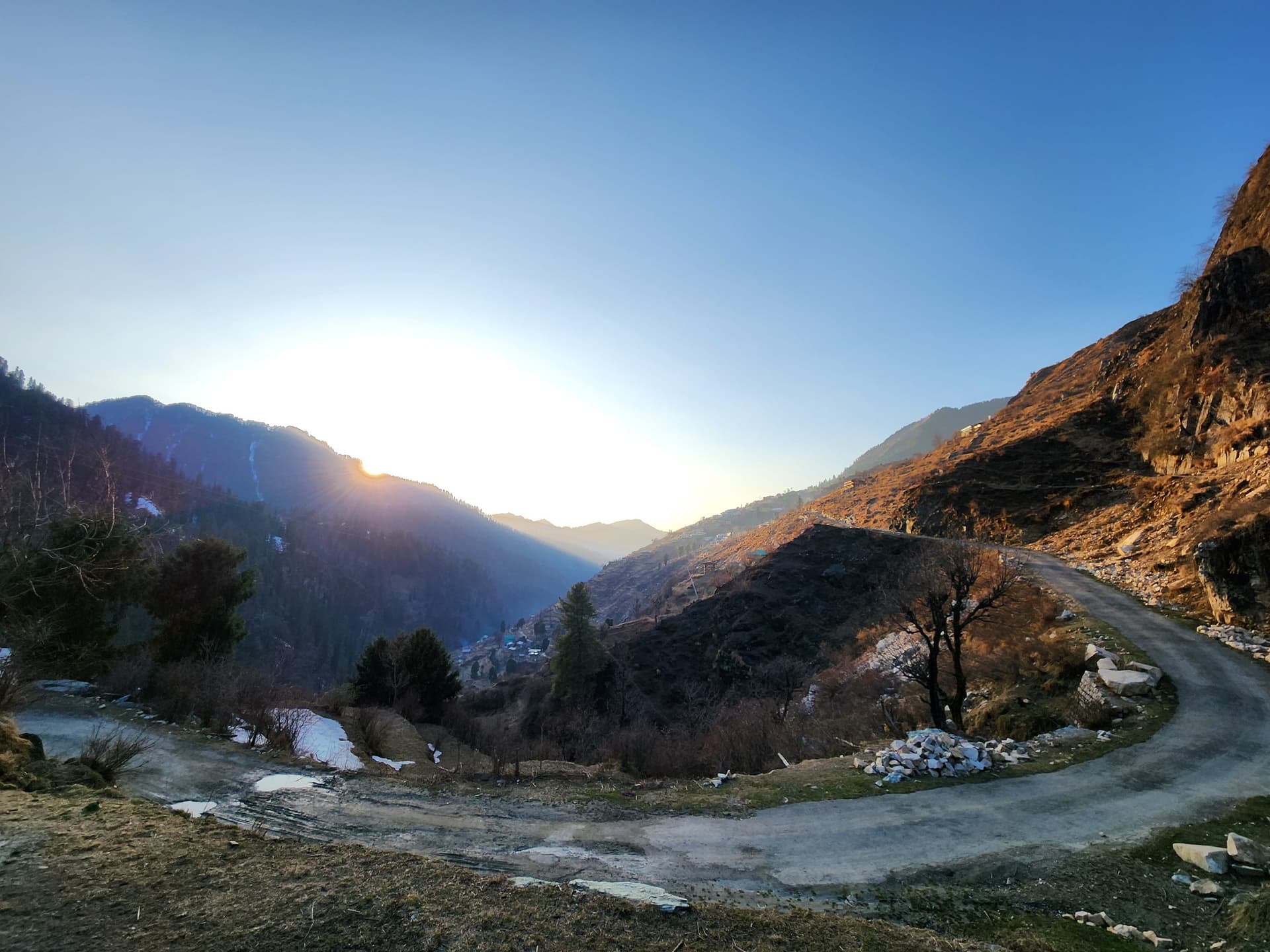
Dirt road winding through dry, sloping hills in the Himachal Pradesh valley
Your Jibhi Itinerary Starts Here
Now that you know the Manali to Jibhi distance, Delhi to Jibhi distance, and all the routes in between, you’re ready to plan your trip. Whether you’re here for trout fishing, Jalori Pass, Serolsar Lake, or just the quiet rhythm of Ailyak, Jibhi welcomes you with open arms.