# Where is Shoja?
Nestled in the quiet folds of Himachal Pradesh’s Tirthan Valley, **Shoja** is a hidden mountain village perched at an altitude of 2700m—just 16 km (45 minutes by road) from Jibhi. This tranquil hamlet lies along NH305, serving as the last stop before the ascent to Jalori Pass. While smaller and even quieter than Jibhi, Shoja is gaining attention as a serene base for travelers seeking authenticity, snow-kissed vistas, and a deeper connection with the Himalayas.
Part of the Kullu district, Shoja shares the same soulful rhythm as **Jibhi Shoja**—a phrase often searched by travelers planning a combined escape into this off-grid region. The village is not just a pitstop; it’s a destination in its own right, where traditional wooden homes dot the hillsides and the air carries the crispness of high-altitude stillness.
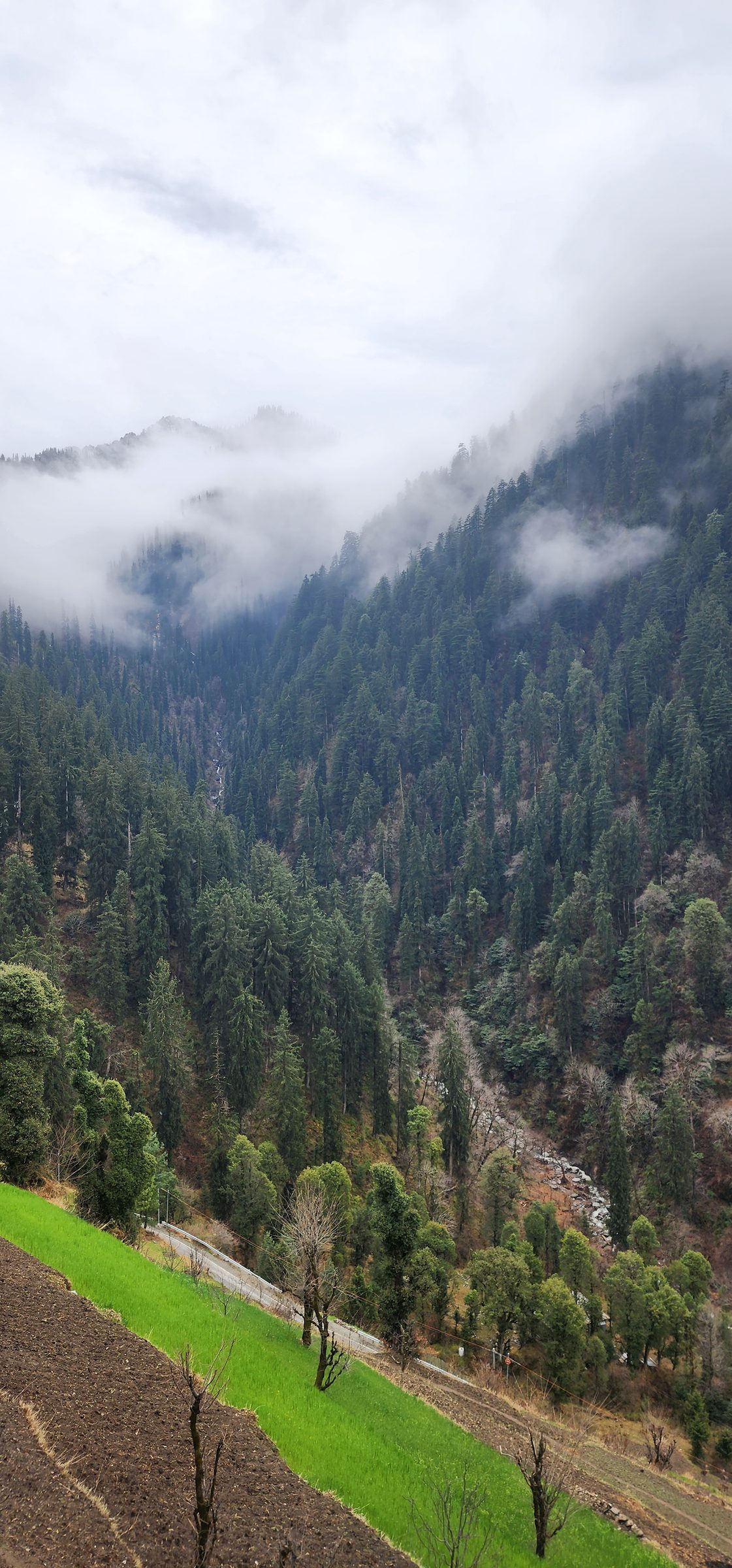
*Misty mountain landscape in the valley*
## Shoja in April: What to Expect Right Now
**Today is 12 April 2026**, and **Shoja in April** is a world waking up. The winter snows have begun to recede, revealing emerald meadows and the first blush of spring blossoms in the lower orchards. While higher ridges may still hold patches of snow, roads to Shoja and beyond are typically clear by now.
This is a transitional month—perfect for travelers who love crisp mornings, soft sunlight filtering through deodar forests, and fewer crowds. Apple trees in nearby Jibhi are just beginning to bud; in Shoja, the silence is still profound. It’s one of the **best times to visit Shoja** if you’re chasing a peaceful retreat before the summer rush.
## Is it Snowing in Shoja? When Will It Snow in Shoja?
As of **12 April 2026**, **it is not snowing in Shoja**. Winter has officially passed, and the village is now in its spring phase. However, snowfall is a major draw here later in the year.
**When will it snow in Shoja?** Typically, snow begins dusting Shoja from late **November** and continues through **January and February**. At 2700m, Shoja receives heavier snowfall than Jibhi (2250m), making it a quiet **snow tourism** hotspot. The road to Jalori Pass closes by December due to snow, but [Shoja village](/things-to-do/shoja-village) remains accessible and transforms into a hushed, frost-laced retreat.
For those dreaming of snow, **plan a [Shoja trip package](/blog/shoja-trip-package) between December and February**—but book early, as guesthouses are limited.
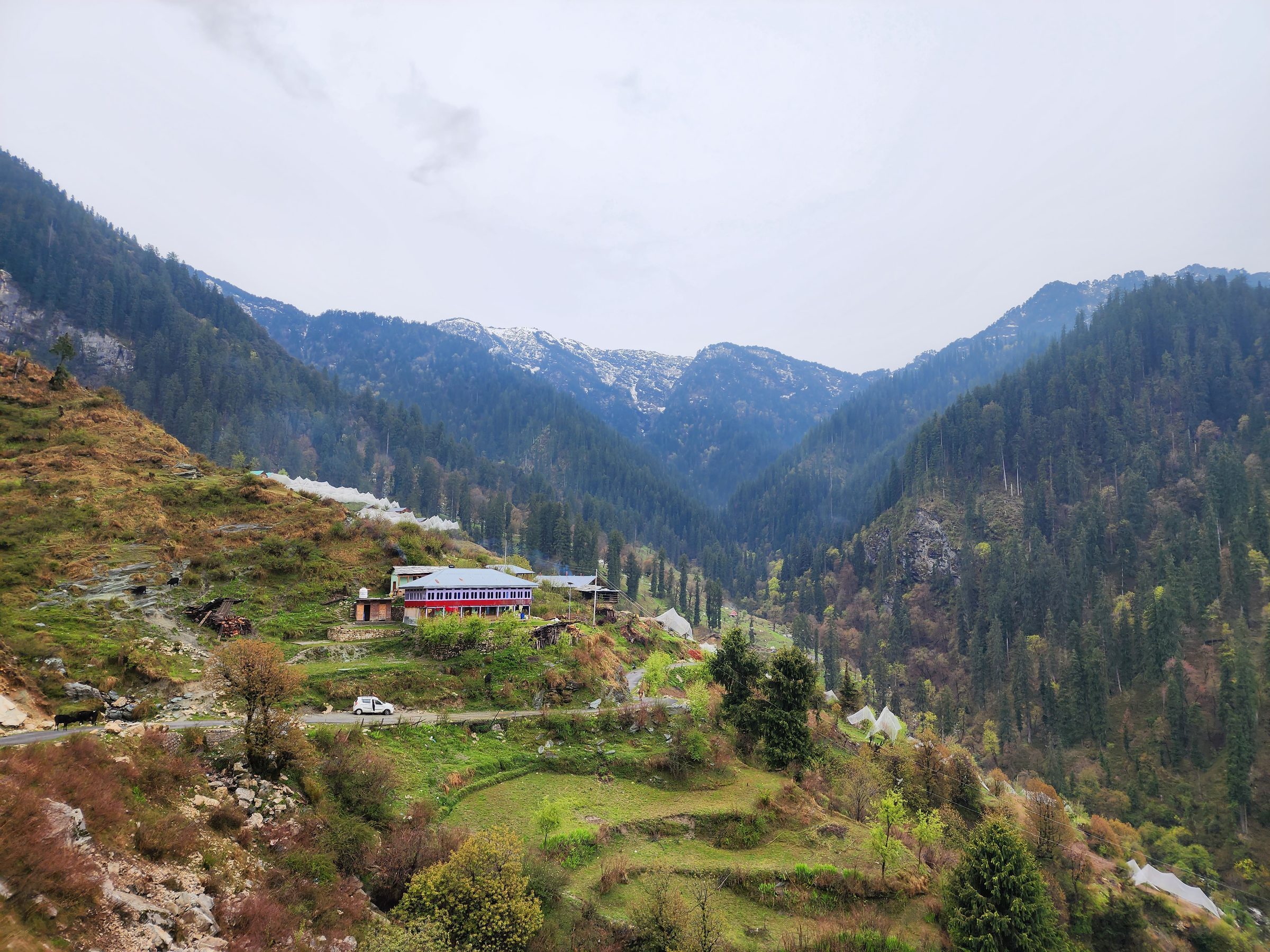
*Mountain views in the valley*
## Jibhi and Shoja: Why Travelers Are Choosing Both
More travelers are searching for **Jibhi Shoja** and **Jibhi and Shoja** as a combined itinerary—and for good reason. While Jibhi offers charming homestays, trout fishing, and the slow-living ethos of *ailyak*, **Shoja** provides higher altitude, quieter trails, and direct access to **Jalori Pass** and **[Serolsar Lake](/things-to-do/serolsar-lake)**.
A **Jibhi Shoja trip** lets you experience both the warmth of valley life and the alpine stillness of the upper hills. Many use Shoja as a base to explore Jalori Pass (just 14 km away), while starting from Jibhi for culture, cafés, and river walks.
For those asking about a **Jibhi Shoja package** or **[Shoja trip package](/blog/shoja-trip-package)**, this dual-village journey is often self-curated—few operators offer structured packages, which makes planning through trusted local stays essential.
## [Cafes in Shoja](/blog/best-cafes-jibhi): What You Need to Know
Unlike Jibhi, **Shoja has no commercial cafés**—and that’s part of its charm. There are no Instagrammable espresso bars or bustling brunch spots. Instead, the experience is intimate: shared meals in homestays, steaming kahwa by the fire, and simple, home-cooked food served with mountain hospitality.
Travelers searching for **best [cafes in Shoja](/blog/best-cafes-jibhi)** may be disappointed if they expect urban-style hangouts. But those who embrace the silence find something richer: connection, stillness, and the warmth of slow living.
## List of Unique Shoja Cultural Experiences
Shoja may be small, but it offers rare, grounded experiences:
- **Morning walks with local shepherds** through oak and deodar forests
- **Stargazing sessions** from quiet terraces under unpolluted Himalayan skies
- **Participating in seasonal farming rituals** in nearby hamlets
- **Staying in heritage wooden guesthouses** built in traditional Kullu style
- **Silent mornings** with only the river and birdsong as company
These quiet moments define the **Jibhi Shoja trip**—not as a checklist, but as a return to presence.
## Ailyak Stays & Experiences: Your Gateway to Shoja and Beyond
For travelers seeking authenticity, **Ailyak Stays & Experiences** offers soulful retreats in Jibhi, Shoja, and Seri, rooted in the local concept of *ailyak*—life without rushing. Choose from cozy private rooms or dorms, each designed for stillness. Enjoy riverside picnics, forest bathing, cold water dipping, and bonfire evenings under starlit skies.
The **Ailyak Café** serves nourishing, simple meals in a tranquil setting—becoming a “third space” for reflection and connection. With reliable WiFi and local transport support, it balances simplicity with comfort.
Planning a **Jibhi [Shoja trip package](/blog/shoja-trip-package)**? Explore curated stays and experiences at **jibhi.in/partners**—your thoughtful next step into the heart of the Himalayas.